End-of-Life Management Matters More Than Ever

End-of-Life Management Matters More Than Ever As global deployment of backup energy solutions accelerates — particularly in critical sectors like data centers for UPS and backup power systems — the industry is entering a new phase. Merely pursuing performance is no longer sufficient. What happens at end-of-life? Lifecycle termination management is emerging as one of the most critical sustainability challenges in the energy transition. Materials sourcing, manufacturing intensity, recyclability, and environmental recovery pathways now directly influence regulatory approval, ESG scoring, insurance risk assessment, and long-term total cost of ownership. In many conventional battery chemistries, end-of-life processing remains complex, energy-intensive, or

How BMS can help the key areas say goodbye to Power outages

How BMS can help the key areas say goodbye to Power outages Power outages are not just an inconvenience in critical sectors such as data centers, telecom networks, hospitals, and financial institutions — they represent a direct operational and financial risk. Even a brief loss of power can result in data loss, service disruption, equipment damage, and significant economic impact. To prevent these consequences, backup power systems are deployed as a fundamental layer of protection. At the heart of these systems are backup batteries, designed to deliver instant power during grid disturbances and bridge the gap until secondary power sources

Grid dependence and energy control rules for businesses in energy transition

Grid dependence and energy control: rules for businesses in energy transition With more than USD 2.2 trillion expected to be invested in renewables, nuclear, grids, storage, electrification, and low-emissions technologies in 2025, electricity has become the backbone of the global energy transition. This shift is not ideological — it is economic. Electricity is now the fastest-growing form of final energy, driven by data centers, AI workloads, electrification of transport and heating, advanced manufacturing, and the digitalization of nearly every industry. Electricity demand is growing more continuous, centralized, and mission-critical, while power grids face overload risks, higher vulnerability, and forecasting uncertainty.

Right selection of backup batteries is a key factor in maintaining AIDC operation

Right selection of backup batteries is a key factor in maintaining AIDC operation As digital infrastructure expands globally, especially in regions with fast-growing data center capacity and harsh environmental conditions, tolerance for power instability continues to shrink. Higher rack densities, AI workloads, and always-on services mean that electrical systems are operating closer to their limits than ever before. However, AIDC differs from conventional data centers, as the operational patterns of AI workloads are entirely distinct from any scenario data centers have encountered before. GPU clusters no longer maintain stable power supply but instead exhibit dramatic fluctuations — loads can surge

Power and Land Constraints Are Redefining Data Center Growth

Power and Land Constraints Are Redefining Data Center Growth The data center market is becoming increasingly constrained by two critical resources: power and land. Demand for data center capacity continues to outpace supply, with rack space and power capacity in major hubs being absorbed as soon as it becomes available. Vacancy rates across leading markets have fallen to historic lows, reflecting a tightening global supply-demand balance. In the United States, Northern Virginia remains the world’s largest data center hub, yet its vacancy rate in 2025 has dropped to just 0.7%, effectively a fully leased market. Atlanta, which had close to

Why Grid Power Alone Is No Longer Enough for Business Continuity?

Why Grid Power Alone Is No Longer Enough for Business Continuity? Industry Trend With the accelerated global electrification process and the rapid expansion of high-energy-consuming infrastructure for commercial and industrial workloads, global electricity consumption is projected to increase 2-3 times in the coming decades, with electricity becoming the largest component of energy demand. Challenges of Power Grid Reliability This growth is not without consequence. The North American Electric Reliability Corporation (NERC) and industry assessments indicate that the pace at which large electrical loads are being added is outstripping the development of grid generation and transmission infrastructure, heightening concerns about system

The Safest and Most Reliable Backup Power Option for Data Centers — Nickel-Zinc Batteries

The Safest and Most Reliable Backup Power Option for Data Centers — Nickel-Zinc Batteries In recent years, fires and explosions caused by battery thermal runaway have continued to make headlines. At the root of these incidents lies a common issue: today’s mainstream backup battery technologies—such as lead-acid and lithium-ion batteries—carry inherent structural limitations in safety and long-term reliability. For data centers, where power continuity and operational safety are non-negotiable, such risks can quickly escalate from equipment damage to service disruption—and in the worst cases, system-wide failures with severe consequences. Lead-Acid Batteries: Gradual Thermal Runaway Driven by Heat Accumulation Thermal runaway

What is Battery Status and how can we assess it?

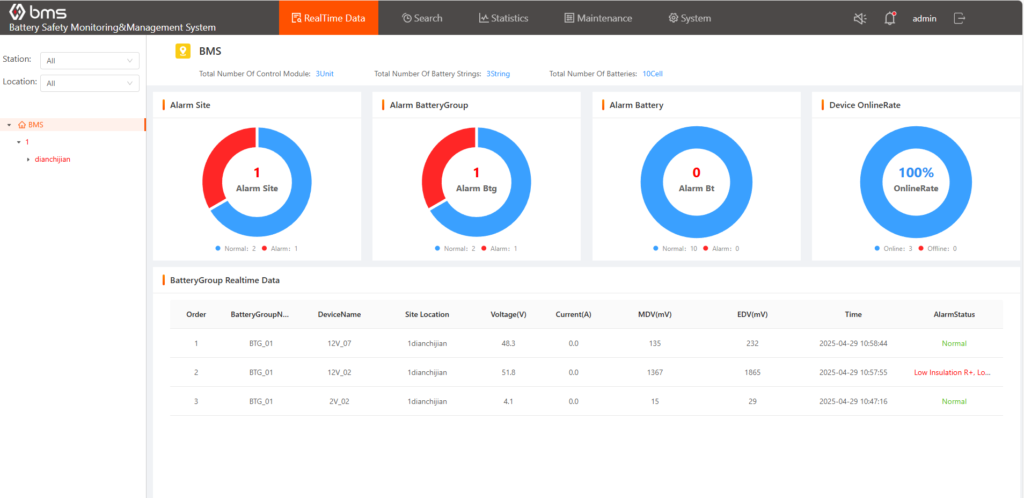
What is Battery Status and how can we assess it? Battery status is a comprehensive indicator that reflects both a battery’s current performance and its long-term usability. For end users, it often appears as a simple “battery percentage” on a screen. In reality, however, battery status encompasses multiple critical dimensions. Voltage, current, temperature, and other key signals should be 24/7 monitored and integrated to deliver a holistic assessment and proactive control of battery status. This is where the Battery Management System (BMS) comes into play. Core Evaluation Dimensions of a BMS 1. Voltage Monitoring Voltage is one of the most

Challenges of Lead-Acid Batteries in Telecom Base Stations and the Rise of Lithium Backup Solutions

Challenges of Lead-Acid Batteries in Telecom Base Stations and the Rise of Lithium Backup Solutions Backup power for telecom base stations, including UPS systems and battery banks composed of multiple parallel rechargeable batteries has traditionally relied on lead-acid batteries. These batteries remain the most widely used energy storage solution in telecom power systems. However, despite their continued relevance, lead-acid batteries face several challenges that cannot be overlooked. 1. Limited Lifespan Lead-acid batteries in telecom applications often fail to reach their manufacturer-rated lifespan. Indoor equipment operating around 25°C typically sees a lifespan of 6–7 years, while outdoor installations—subject to higher temperatures—may

Six O&M Priorities That Define Reliable Data Center Infrastructure

Six O&M Priorities That Define Reliable Data Center Infrastructure Routine inspection is a foundational element of data center facility operations. It plays a critical role in uncovering hidden risks, preventing incidents, and ensuring business continuity. As automation grows and organizations push for efficiency, inspections must evolve from “routine walk-arounds” to a more trend-driven, risk-focused, and early-warning approach. In globally recognized data center operation standards, inspections, together with monitoring, alarms, and incident response, form the first line of defense. Their value lies in detecting trends, understanding environmental conditions, and validating changes to capture potential risks before they become problems. Here are

EMS: The Undisputed Core of Revenue Generation in European Energy Storage

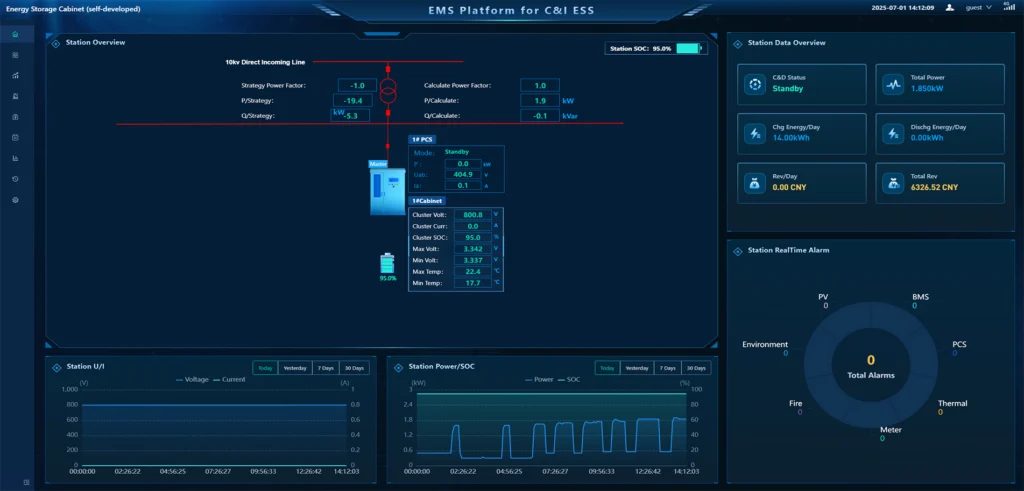
EMS: The Undisputed Core of Revenue Generation in European Energy Storage Driven by Europe's "Carbon Neutrality by 2050" goal, Battery Energy Storage Systems (BESS) have evolved from being "auxiliary equipment" in the energy system to a core pillar. The Energy Management System (EMS), serving as the "intelligent brain" of energy storage, is becoming the critical variable determining a project's profitability. Whether it's capturing arbitrage opportunities from electricity price fluctuations, optimizing the efficiency of solar-storage synergy, or mitigating safety and compliance risks, the EMS is integral to the entire commercial chain of European energy storage. It is the core engine enabling

Australia’s Storage Accelerates Energy Transition

Australia's Storage Accelerates Energy Transition Australia's National Electricity Market (NEM) is undergoing a profound transformation. As coal-fired power generation gradually phases out and renewable energy's share rapidly increases, Battery Energy Storage System (BESS) has become a core pillar of the energy transition. In the first quarter of 2025, over A$2.4 billion was invested in large-scale battery storage projects, marking the second-highest quarterly investment record in history and signaling an accelerated phase in the restructuring of Australia's energy landscape. Three Major Drivers of Soaring Storage Demand Firstly, the accelerated retirement of traditional coal-fired units creates grid stability needs. According to energy market forecasts, nearly
1 2 3 10