The data center market is becoming increasingly constrained by two critical resources: power and land. Demand for data center capacity continues to outpace supply, with rack space and power capacity in major hubs being absorbed as soon as it becomes available. Vacancy rates across leading markets have fallen to historic lows, reflecting a tightening global supply-demand balance.
In the United States, Northern Virginia remains the world’s largest data center hub, yet its vacancy rate in 2025 has dropped to just 0.7%, effectively a fully leased market. Atlanta, which had close to 9% vacancy only a few years ago, has now fallen to around 2–3%, while Phoenix has dropped below 2%. For both operators and investors, the pressure of limited capacity is clearly visible.
This trend is not limited to the U.S. Globally, in the first quarter of 2025, major data center markets — including Northern Virginia, London, Frankfurt, and Singapore —
reported a weighted average vacancy rate of only 6.6%, down 2.1 percentage points year-on-year. This means most newly built capacity is leased almost immediately, making data center infrastructure increasingly scarce worldwide.
Beyond power availability, land has become another major constraint. The cost of acquiring and developing suitable sites continues to rise, pushing operators toward higher rack densities as the only viable way to scale capacity within limited footprints.
Opportunity and Challenge of High-Density Racks
High-density racks allow more servers and computing equipment to be deployed in the same physical space. While traditional racks operate at relatively low power densities, modern high-density racks can support 20 kW to over 100 kW per cabinet, dramatically increasing computing capacity per square meter.
IHowever, this shift also places far greater demands on backup power systems. As rack power density increases, the reliability, safety, and response speed of UPS systems become mission-critical.
Reliable Backup Power with Gerchamp Nickel-Zinc Batteries
UPS systems are the last line of defense when the grid fails — even a brief outage can cause severe operational and financial losses. Gerchamp’s nickel-zinc batteries provide a new generation of backup power for high-reliability UPS applications.
Compared with lead-acid batteries, nickel-zinc batteries deliver 10 – 20% higher energy density in the same footprint, while being smaller and lighter. This reduces equipment procurement costs, civil engineering and retrofitting expenses, floor-loading requirements, accessory costs, and battery room operating costs — ultimately lowering total system construction cost.
More importantly, Gerchamp’s nickel-zinc technology is inherently free from thermal runaway. This fundamental safety advantage reduces the need for complex fire-suppression systems, lowering both power consumption and space requirements — critical benefits in land- and power-constrained data center environments.
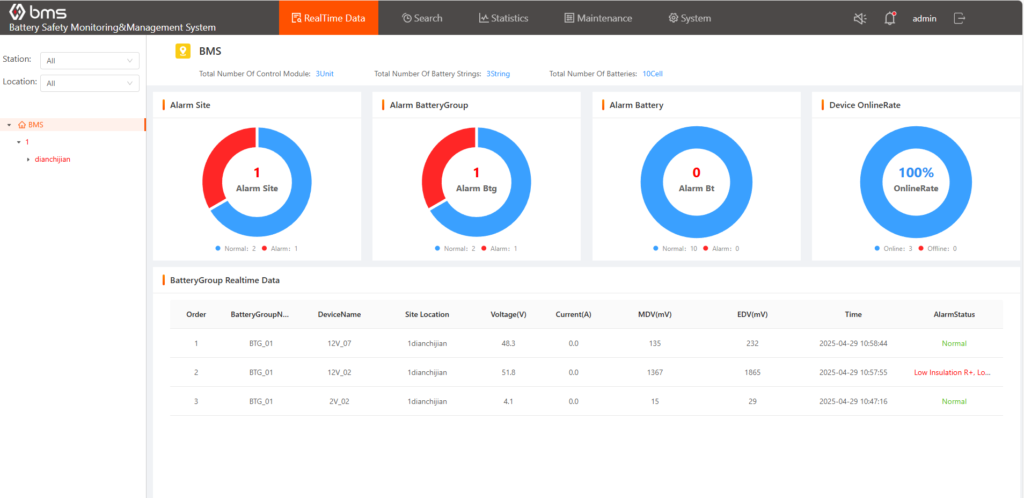
Apply a demo of Gerchamp’s Cloud Platform
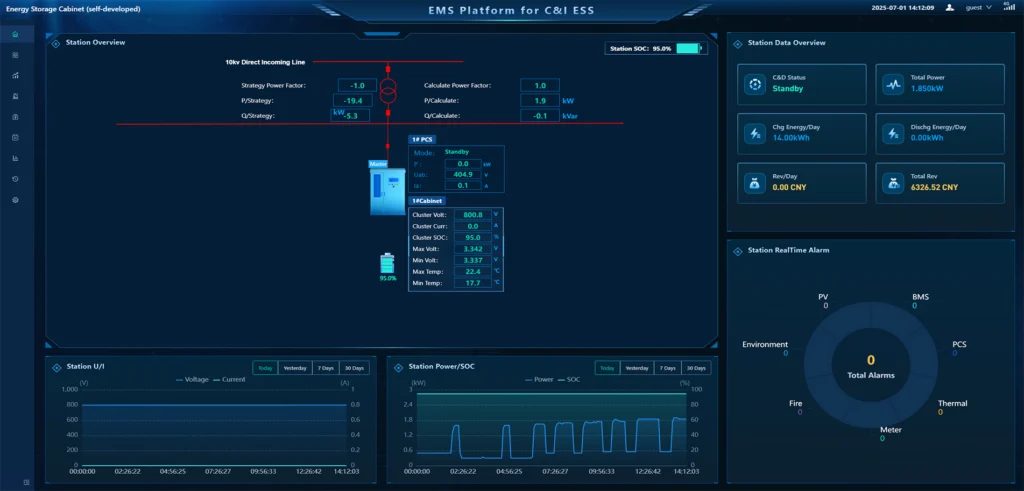
Apply a demo of Gerchamp’s Cloud Platform
 Gerchamp