Power outages are not just an inconvenience in critical sectors such as data centers, telecom networks, hospitals, and financial institutions — they represent a direct operational and financial risk. Even a brief loss of power can result in data loss, service disruption, equipment damage, and significant economic impact.
To prevent these consequences, backup power systems are deployed as a fundamental layer of protection. At the heart of these systems are backup batteries, designed to deliver instant power during grid disturbances and bridge the gap until secondary power sources stabilize. In modern infrastructure, backup batteries are no longer optional accessories — they are mission-critical assets.
However, backup batteries themselves are not immune to failure.
Battery degradation, uneven aging, loose connections, thermal stress, and hidden internal faults can all compromise backup performance. In many real-world incidents, power loss occurs not because batteries were absent, but because their true condition was misunderstood. Periodic inspections alone are no longer sufficient to ensure reliability, especially in environments characterized by high temperatures, continuous operation, and growing power density.
This is why real-time battery monitoring has become essential.
Gerchamp’s Battery Monitoring System is designed to provide continuous, granular visibility into battery health, transforming backup batteries from passive components into actively managed assets. The system monitors key parameters including ambient environmental temperature, negative terminal temperature, battery voltage, and internal resistance, etc.. By tracking these indicators in real time, early signs of abnormal behavior can be identified long before they evolve into failures.
Thermal management plays a particularly critical role. Elevated temperatures accelerate battery aging and increase the risk of unexpected performance drops. Gerchamp’s BMS enables operators to detect localized heating and take corrective actions proactively — rather than reacting after an outage occurs. More critically, for lead-acid batteries and lithium batteries,severe thermal runaway can trigger a series of accidents such as fires and explosions.
In critical infrastructure, reliability is built on layers. Backup batteries protect systems from power loss, but BMS protects the batteries themselves. By ensuring batteries operate within safe, efficient parameters at all times, battery monitoring becomes the silent guardian of backup power systems.
As data centers and other critical facilities continue to scale in size and complexity, robust battery monitoring is no longer a “nice-to-have” feature. It is a foundational element that enables these infrastructures to grow safely, sustainably, and with confidence.
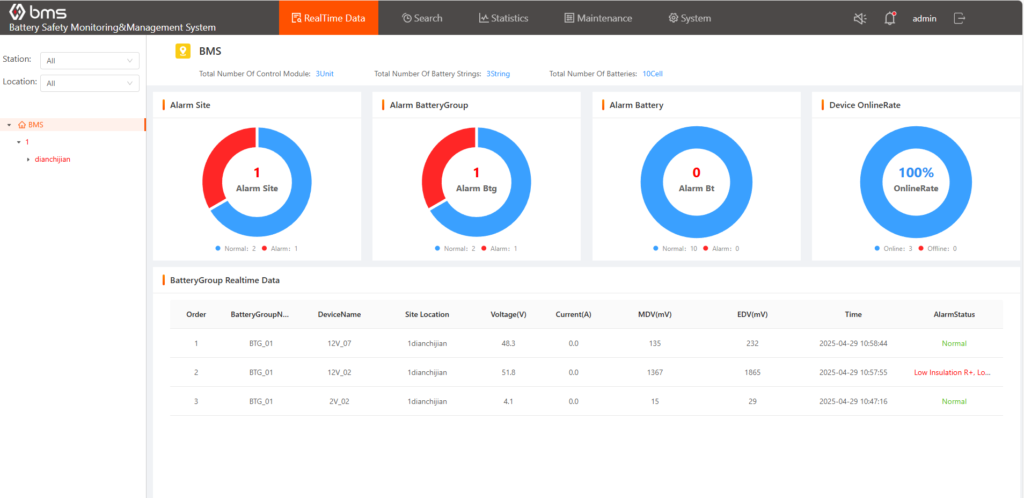
Apply a demo of Gerchamp’s Cloud Platform
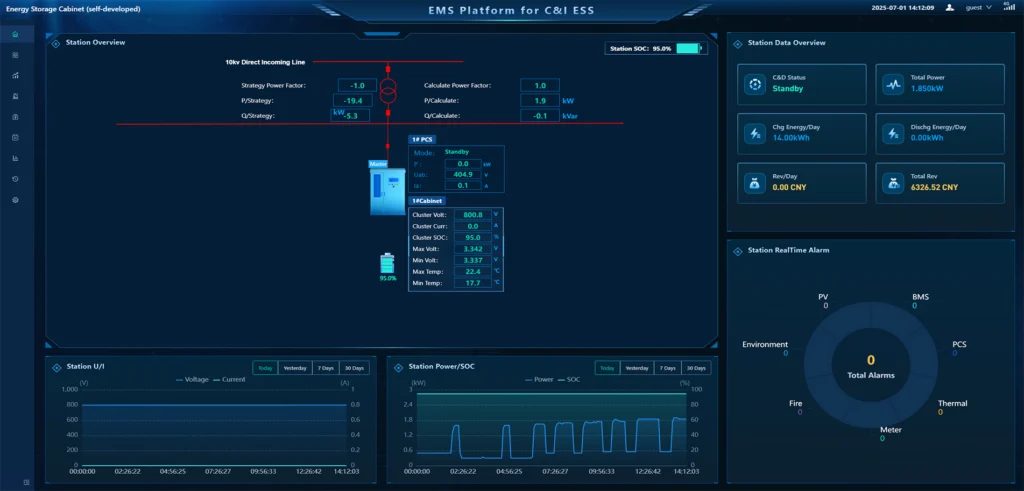
Apply a demo of Gerchamp’s Cloud Platform
 Gerchamp