Advantages and Applications of Distributed Battery Management Systems

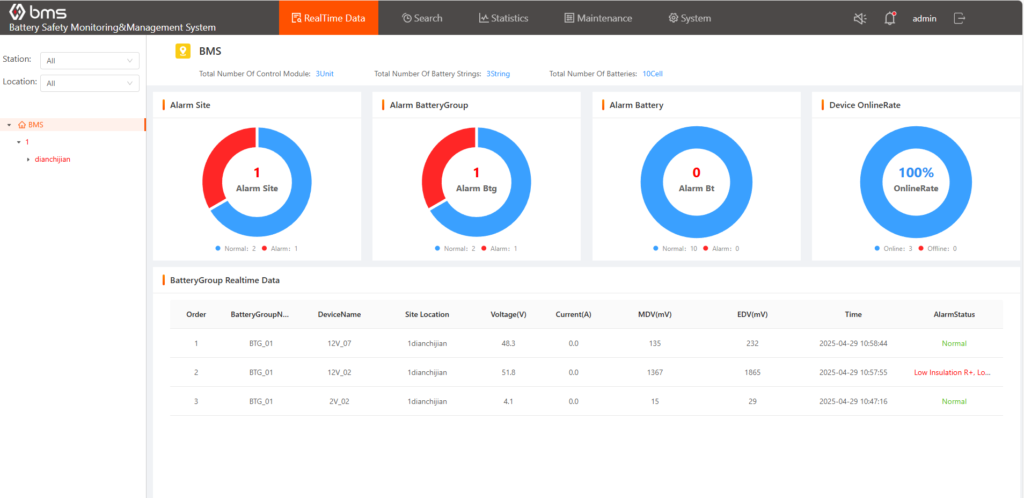
Advantages and Applications of Distributed Battery Management Systems Distributed Battery Management System (BMS) achieves monitoring and control of batteries by distributing battery management functions across multiple nodes. Each node is responsible for managing a localized area of the battery, which allows for more precise monitoring of each battery cell and offers greater scalability and flexibility. A distributed BMS system is highly reliable and redundant, making it particularly suitable for scenarios with high battery management requirements, such as data centers and energy storage fields. Advantages of a Distributed Battery Management System Compared to centralized BMS, distributed BMS offers several significant functional advantages.

How Ambient Temperature is Silently Killing Your Lead-Acid Batteries

How Ambient Temperature is Silently Killing Your Lead-Acid Batteries Ambient temperature is a critical factor influencing the performance, safety, and lifespan of lead-acid batteries. Even minor deviations from the optimal range can lead to significant capacity reduction, accelerated degradation, and increased risk of failure. Without proper monitoring, these issues can escalate, causing unplanned downtime and costly repairs. The Hidden Costs of Improper Temperature Management For industries reliant on uninterrupted power, operating batteries under improper conditions leads to immediate and severe consequences:  Reduced Lifespan: For every 10°C increase above the optimal temperature, a battery's life can be cut in half. Increased

What is Battery Balancing and the Role of Lithium-Ion BMS?

What is Battery Balancing and the Role of Lithium-Ion BMS? Lithium battery packs, as the cornerstone of energy storage systems, are typically composed of multiple batteries connected in series or parallel. However, discrepancies in manufacturing, aging rates, and temperature variations can lead to inconsistencies in voltage and capacity among single cells. These imbalances can significantly affect the overall performance, lifespan, and safety of the battery pack. Moreover, during idle periods, the chemical reactions within lithium batteries cause a gradual loss of charge. This self-discharge characteristic further exacerbates imbalances between batteries, posing additional challenges to the battery system. Key Impacts of

Centralized Battery Management System: Enhancing Battery Safety and Efficiency

Centralized Battery Management System: Enhancing Battery Safety and Efficiency With the rapid development of battery technology, Battery Management Systems (BMS) are becoming increasingly important in fields such as energy storage systems. As the core architecture, centralized Battery Management Systems offer many unique advantages. This article will briefly introduce several main features of centralized Battery Management Systems to help readers understand their crucial role in battery management. Centralized Monitoring and Management A prominent feature of centralized Battery Management Systems is their centralized data management. The voltage, temperature, and other states of all individual battery cells are monitored and managed uniformly through

BESS vs ESS: Technical Advantages and Challenges

BESS vs ESS: Technical Advantages and Challenges BESS (Battery Energy Storage System) and ESS (Energy Storage System) are important energy storage solutions. In modern energy systems, BESS vs ESS is a highly discussed topic. However, they have significant differences in technical principles, application scenarios, and challenges they face. BESS vs ESS: Definitions ESS is a broad concept that refers to all types of energy storage systems, including battery storage, pumped hydro storage, compressed air energy storage, and more. BESS is a subcategory of ESS, specifically referring to systems that store electrical energy through batteries, commonly including lithium-ion batteries, lead-acid batteries, etc. BESS vs

The Role of IoT Battery Management System in Smart Grid

The Role of IoT Battery Management System in Smart Grid With the rapid development of smart grids, IoT Battery Management Systems (BMS) are playing an increasingly important role in enhancing grid efficiency, optimizing energy management, and achieving sustainable development. By incorporating Internet of Things (IoT) technology, BMS provides real-time monitoring, optimized management, and intelligent decision support for smart grids. This article will explore the core role of IoT Battery Management Systems in smart grids. Enhancing Battery Storage Efficiency In smart grids, Battery Energy Storage Systems (BESS) are used to balance fluctuations in power supply and demand. The IoT Battery Management System ensures

Basic Components and Working Principle of BMS Structure

Basic Components and Working Principle of BMS Structure The Battery Management System (BMS) is a core technology for battery management and monitoring, widely applied in renewable energy storage, consumer electronics, and other fields. The design of the BMS structure directly impacts the performance, safety, and lifespan of batteries. This article will explore the basic composition and working principles of the BMS structure and analyze its key role in battery management. Basic Composition of BMS Structure The BMS structure comprises multiple core components that work in synergy to ensure the efficiency, safety, and longevity of the battery system. Battery Monitoring Unit (BMU):

Safeguarding Lead-Acid Batteries: Understanding Overcharge, Overdischarge, and BMS Solutions

Safeguarding Lead-Acid Batteries: Understanding Overcharge, Overdischarge, and BMS Solutions Lead-acid batteries, as a well-established energy storage technology, are widely used in data centers, telecommunications, and other fields. During practical use, overcharging and overdischarging pose significant threats to battery performance and operational safety. A Battery Management System (BMS) for lead-acid batteries plays a critical role by precisely monitoring and effectively preventing such issues.  Hazards of Overcharging and Overdischarging  Gassing Overcharging causes water electrolysis inside the battery, producing significant amounts of hydrogen and oxygen. The accumulation of these gases increases internal pressure, especially in sealed batteries like VRLA (Valve Regulated Lead-Acid) batteries. If the gas

Temperature as a Key Factor in Lithium Battery BMS: Preventing Thermal Runaway

Temperature as a Key Factor in Lithium Battery BMS: Preventing Thermal Runaway Temperature is a critical factor affecting the safety, performance, and lifespan of lithium batteries. If a battery overheats, its internal temperature, pressure, and other parameters can become unstable, potentially leading to serious consequences such as Thermal Runaway. Battery Management System (BMS), by comprehensively monitoring and managing the temperature of each single battery or battery module, prolongs battery life and improves battery performance, while effectively preventing thermal runaway risks, therefore, guaranteeing the safety of lithium battery operation.  Influence of Temperature on Lithium Battery Ambient temperature refers to the surrounding

The Key Role of Lead-Acid Battery Monitoring Systems

The Key Role of Lead-Acid Battery Monitoring Systems Batteries are currently widely used power storage devices, and lead-acid batteries are one of the most common types. In various application scenarios, such as UPS power supplies, solar power systems, the monitoring of lead-acid batteries has become very important. This article will provide an in-depth analysis of the Lead-Acid Battery Monitoring System and explore its related extended applications. The Role of the Lead-Acid Battery Monitoring System Safety Guarantee Batteries may have issues like overcharge, overdischarge, and overheating, which may shorten the battery's lifespan or even lead to dangers such as fires. The Lead-Acid Battery

BMS Energy Storage Applications: BESS vs. C&I ESS

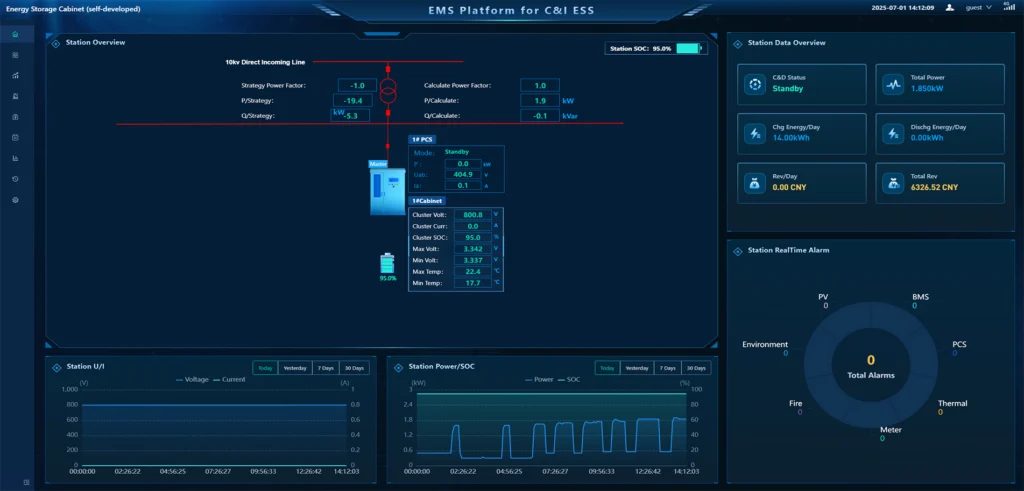
BMS Energy Storage Applications: BESS vs. C&I ESS The essence of energy storage is to solve the contradiction between the continuity of power supply production and the intermittency of power demand and to realize the stable operation of power in the power generation side, grid side, and user side. Electrochemical energy storage is currently the most potential energy storage technology due to its high energy density, high technological maturity, long life of usage, and other advantages with long-term profitability. Lithium battery is an important form of electrochemical energy storage, occupying a major position in the application of the energy storage

Interpretation of BMS Monitoring Items and Their Significance for Battery Safety

Interpretation of BMS Monitoring Items and Their Significance for Battery Safety The Battery Management System (BMS), as a strong guarantee for the safe usage of batteries, has become one of the Indispensable roles in modern industries due to its powerful battery monitoring, early warning and managing functions. The standard monitoring items of BMS mainly include: Battery Voltage, Internal Resistance, Internal Battery Temperature, Connection strip resistance, Charge and Discharge Current, Ambient Temperature. Battery management system, whether lead acid BMS or lithium battery BMS, is always equipped with basic functions as operational safety insurance of batteries through real-time monitoring of relevant items to timely warning potential