With more than USD 2.2 trillion expected to be invested in renewables, nuclear, grids, storage, electrification, and low-emissions technologies in 2025, electricity has become the backbone of the global energy transition. This shift is not ideological — it is economic. Electricity is now the fastest-growing form of final energy, driven by data centers, AI workloads, electrification of transport and heating, advanced manufacturing, and the digitalization of nearly every industry.
Electricity demand is growing more continuous, centralized, and mission-critical, while power grids face overload risks, higher vulnerability, and forecasting uncertainty. During peak summer or winter periods, grids often resort to blunt tools such as load shedding to maintain system safety.
For commercial and industrial users, this reality translates directly into higher costs and operational risk — power outages, voltage fluctuations, and supply interruptions that can paralyze production lines, data centers, logistics hubs, and entire facilities, leading to substantial economic losses.
Energy resilience is no longer optional — it is strategic
Businesses that rely entirely on the grid are increasingly exposed to risks they do not control. This is why on-site energy storage and intelligent energy management are becoming foundational assets for commercial and industrial facilities — not as emergency backups alone, but as active tools to stabilize operations and costs.
A modern C&I energy storage system allows enterprises to:
By continuously monitoring an enterprise’s load curve, an energy storage system can rapidly discharge power when peak demand approaches — or has already occurred — offsetting part of the grid-supplied electricity. This effectively flattens the maximum demand reported to the grid, directly reducing monthly demand charges and long-term electricity costs.
From passive consumption to active power management
This is where integrated, all-in-one C&I energy storage systems fundamentally change the equation.
Designed for industrial parks, office buildings, and commercial complexes, Gerchamp’s C&I Energy Storage System brings battery storage, power conversion, energy management, and protection into a single, coordinated platform. Instead of fragmented subsystems reacting independently, the system operates as a unified energy brain — enabling faster response, simplified management, and higher operational reliability.
With built-in BMS, PCS, EMS, and HV protection, such systems are engineered not just for efficiency, but for real-world resilience: CE-compliant, IP54-rated for outdoor environments, and protected by multi-level safety mechanisms to ensure stable operation under demanding conditions.
Beyond resilience, intelligent energy management enables additional value — from time-of-use arbitrage and demand response to reverse power protection and remote scheduling — helping businesses optimize how, when, and where electricity is consumed.
The new competitive advantage: securing power, not just consuming it.
In the new energy era, competitive advantage will not belong to those who simply consume more electricity — but to those who can secure it.
The most resilient companies will be the ones that can store, manage, and control their own power when the grid cannot. Energy storage is no longer just a buffer. It is becoming a core operating asset, enabling businesses to navigate grid constraints, rising costs, and increasing uncertainty with confidence.
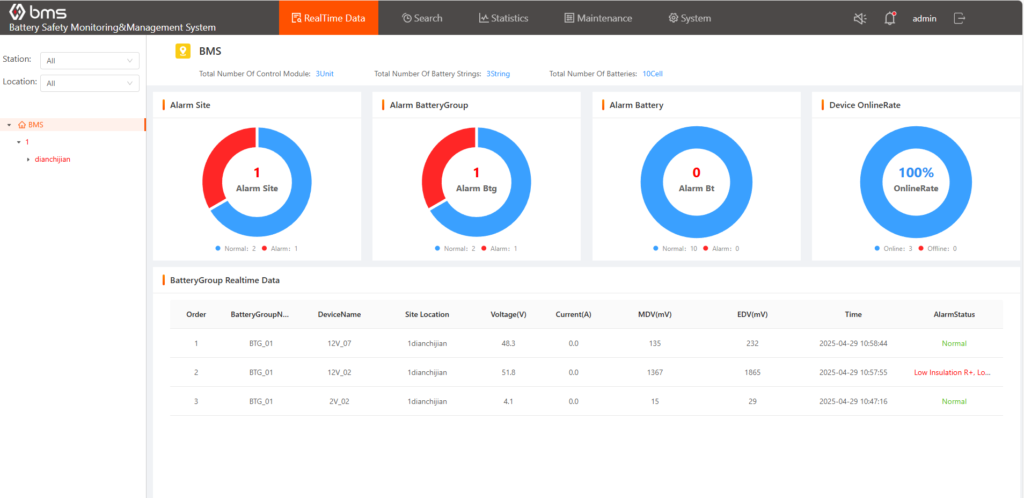
Apply a demo of Gerchamp’s Cloud Platform
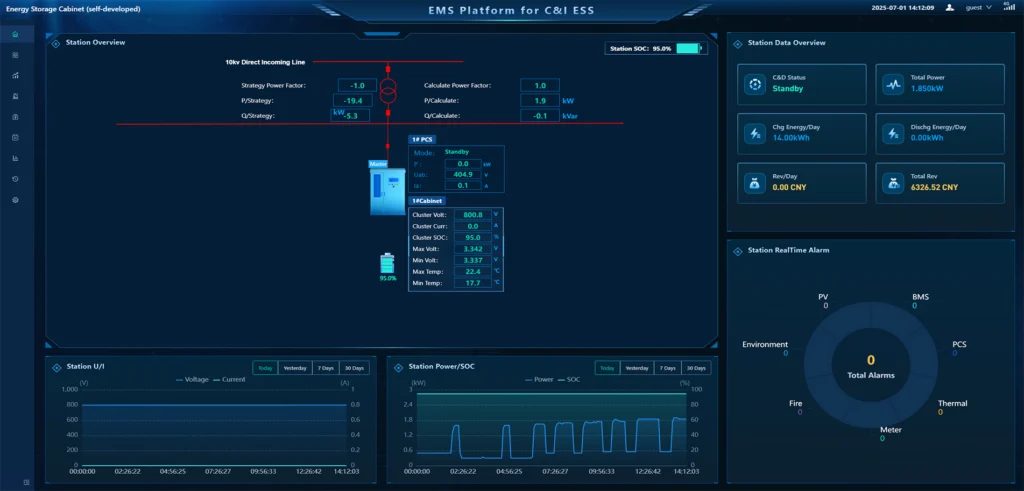
Apply a demo of Gerchamp’s Cloud Platform
 Gerchamp