

Blog
Blog
Product news, customer stories, and insights from our team.
insights
Internal Resistance: The Key Parameter That Defines True UPS Battery Performance

 Read more →
Browse posts
ClearCategories
Tags
-
insights
10C Discharge: Why Choose Nickel-Zinc Batteries for UPS Applications?

Discover how Gerchamp’s Nickel-Zinc batteries excel in UPS applications with 10C discharge capabilities, offering rapid response and stable voltage under high demand.
Read more → -
insights
Nickel Zinc Battery: Why Aqueous Chemistry Matters
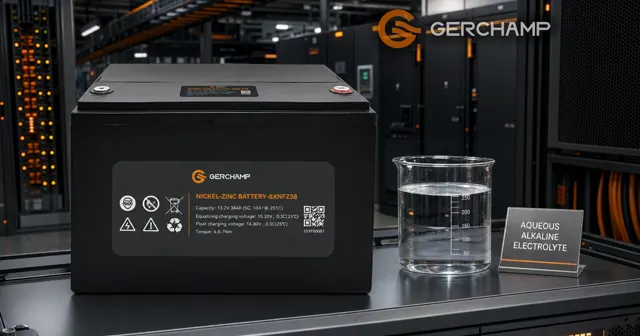
Discover how the aqueous chemistry of nickel-zinc batteries enhances safety and performance for UPS applications, making them ideal for critical power systems.
Read more → -
insights
From Nickel-Zinc Batteries to Smart Battery Cabinets

Explore Gerchamp's evolution from Nickel-Zinc batteries to advanced smart battery cabinets, designed for high power density and operational resilience in critical applications.
Read more → -
insights
How Nickel-Zinc Batteries Bypass the “Hard Requirements” of Dedicated Battery Rooms
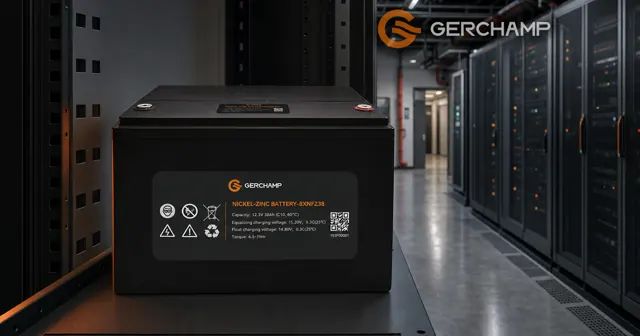
Discover how Nickel-Zinc batteries can ease the challenges of retrofitting battery rooms in data centres, offering a safer and more cost-effective solution.
Read more → -
insights
Backup Power Needs Less Storage, More Density

Understanding the difference between power density and energy density is crucial for data centres. Discover how nickel-zinc batteries excel in backup power needs.
Read more → -
insights
Why Are Your UPS Batteries Dying Early?
Discover why UPS batteries often fail prematurely because of ripple effects. Understand the impact of voltage and current ripple on battery life and performance.
Read more → -
insights
Optimising legacy UPS assets: The case for constraint-aware power architectures in the AI era


Explore how constraint-aware power architectures can optimise legacy UPS assets in the AI era, enhancing efficiency while addressing safety and compliance needs.
Read more → -
insights
A Full Charge Doesn’t Mean It Can Deliver When It Counts
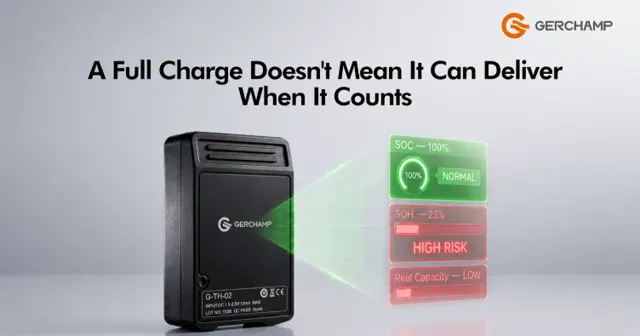
Understanding the difference between SOC and SOH is crucial for effective battery management. Discover how the Gerchamp G-TH Battery Management System enhances battery health monitoring.
Read more → -
insights
Gerchamp BMS: A Round‑the‑Clock Health Watchdog for Backup Batteries

Discover how the Gerchamp BMS provides continuous visibility for backup batteries, enabling proactive monitoring and maintenance to prevent failures in critical applications.
Read more → -
insights
Gerchamp Nickel-Zinc: Full Power Even at Low SOC
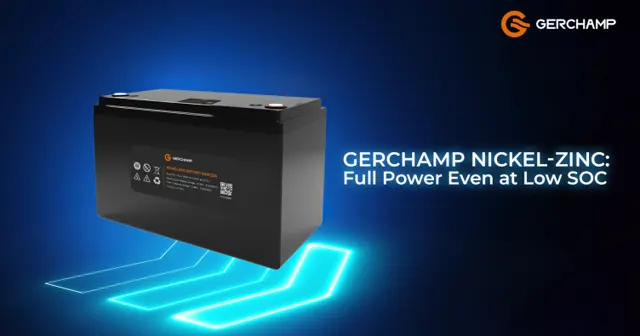
Discover how Gerchamp Nickel-Zinc batteries maintain maximum power output even at low SOC, enhancing efficiency for AI data centres and high-density computing environments.
Read more → -
insights
Modular Data Centre: Missing Piece of the Puzzle

Explore how Nickel-Zinc batteries address the unique power needs of modular data centres, enhancing safety and efficiency in constrained environments.
Read more → -
insights
Data Centre Energy Consumption: How NiZn Batteries Reduce Hidden Losses
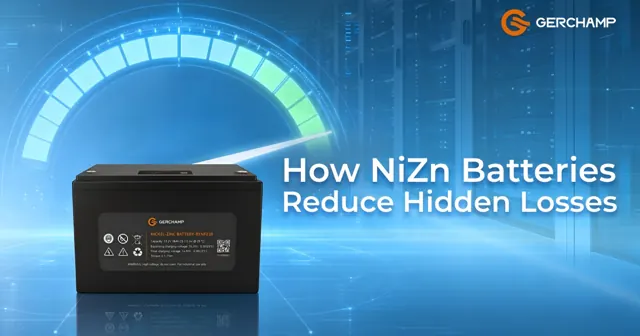
Discover how NiZn batteries can significantly reduce hidden energy losses in data centres. Explore their benefits for UPS systems and overall energy efficiency.
Read more → -
insights
BMS Supports High-Efficiency Telecommunications Base Stations in the 5G Era

In the 5G era, the energy demand of telecommunications base stations has increased significantly.
Read more → -
insights
What Does a Battery Energy Storage System Include?
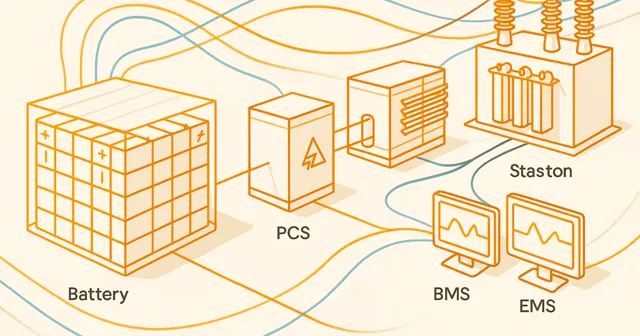
The composition of an energy storage system mainly includes the battery system, PCS converter system, box transformer system (if any), station transformer system (if any), energy management system and monitoring system (SCADA system), primary and sec...
Read more → -
insights
A New Perspective on Cost Reduction in Data Centres

AI workloads are redefining data centre power demand—here’s why UPS systems must evolve with nickel-zinc battery technology for higher density, fire safety, and lower TCO.
Read more → -
insights
When AI Workloads Redefine Power Demand, UPS Must Evolve

Artificial intelligence is not just changing how we compute — it is fundamentally reshaping how electricity is consumed. A single ChatGPT query consumes approximately 2.9 Wh of electricity, compared with 0.3 Wh for a traditional Google search.
Read more →