

Blog
Blog
Product news, customer stories, and insights from our team.
Blog
Modular CDU Design: Three Modules, One Enclosure
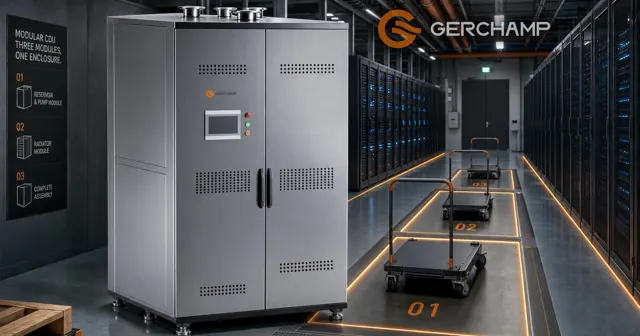

Explore the benefits of a modular CDU design, which allows for easier installation and maintenance through separate functional modules, enhancing efficiency in data center operations.
Read more →Browse posts
ClearCategories
Tags
-
Blog
L2A CDU Architecture: Two Loops, Two Media
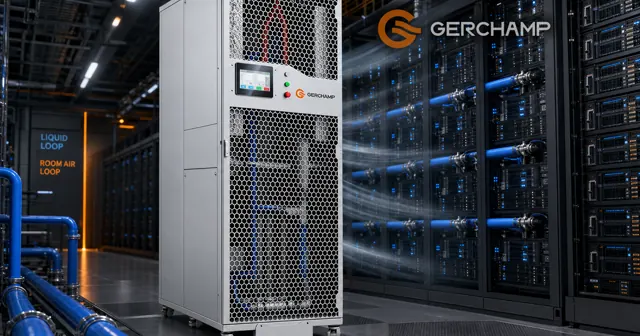
Explore the L2A CDU architecture, featuring two loops for efficient heat management. Learn how this design impacts cooling capacity and deployment in data centers.
Read more → -
Blog
Sidecar CDU Advantages: Liquid Cooling Without Facility Water
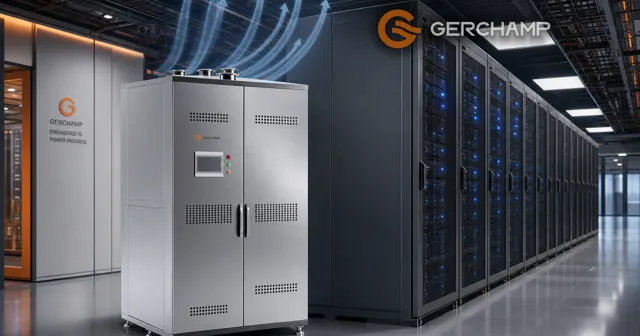
Discover the advantages of sidecar CDUs for liquid cooling in data centers. Learn how they eliminate the need for facility water and streamline deployment.
Read more → -
Insights
Why Do Next-Generation UPS Backup Power Solutions Need Intelligent Battery Management?
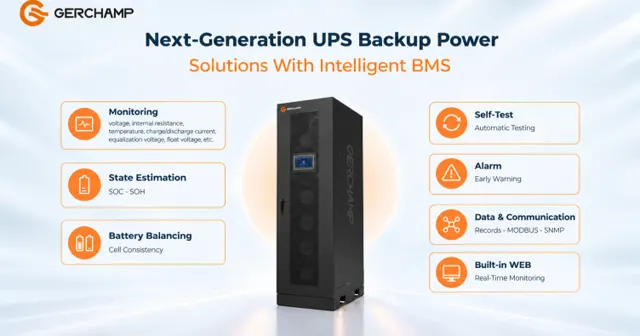
Discover why intelligent battery management is essential for next-generation UPS backup power solutions. Learn how Gerchamp's BMS enhances reliability and safety.
Read more → -
Blog
Nickel Zinc Battery and Battery Degradation

Explore how battery degradation impacts the performance of Nickel Zinc batteries in UPS systems. Learn how Gerchamp's solutions enhance reliability and longevity.
Read more → -
Blog
Nickel Zinc Battery and UPS Oversizing
Understand UPS oversizing and its implications for Nickel Zinc batteries in data centers. Learn how Gerchamp's design minimizes space and cost while meeting power needs.
Read more → -
Company News
Gerchamp Debuts a New-Generation Nickel-Zinc Battery Cabinet for Data Centers
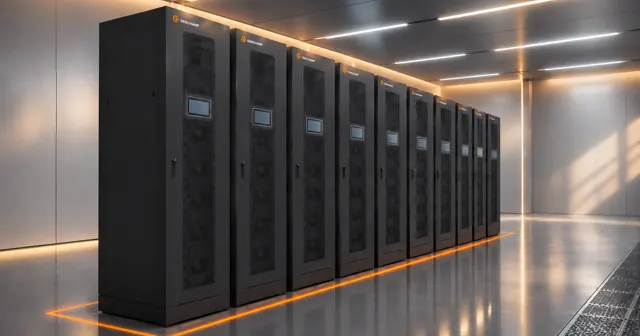
Gerchamp launched its new GZC-9038S Nickel-Zinc Battery Cabinet, designed for high-density data centers. It offers rapid power delivery and enhanced safety features.
Read more → -
Blog
Nickel Zinc Battery and Recharge Speed

Explore how recharge speed impacts the performance of Nickel Zinc batteries in UPS applications, ensuring quick recovery for continuous backup power.
Read more → -
Blog
Nickel Zinc Battery and C-rate

Understanding C-rate is essential for evaluating the performance of Nickel Zinc batteries in UPS applications. Discover how Gerchamp's design supports high discharge demands.
Read more → -
Blog
Nickel Zinc Battery and Microcycling

Microcycling affects the performance and lifespan of Nickel Zinc batteries in UPS systems. Discover how Gerchamp's design addresses these challenges for reliable backup power.
Read more → -
Blog
Nickel Zinc Battery and Power Quality

Understanding power quality is crucial for Nickel Zinc batteries in UPS systems. Learn how Gerchamp's batteries ensure stable power for critical loads in data centers.
Read more → -
Company News
Gerchamp Showcases Integrated AI Data Centre Solutions at DCWA 2026

Discover Gerchamp's integrated AI data centre solutions at DCWA 2026, featuring nickel-zinc UPS backup power, liquid cooling, and modular AIDC systems for enhanced performance.
Read more → -
Blog
Nickel Zinc Battery and Microcycling

Discover how Dynamic Power impacts the performance of Nickel Zinc Batteries in UPS applications. Learn about key factors that enhance their response to load changes.
Read more → -
Company News
Gerchamp Launches Modular AI Data Center to Bring High-Density Compute to Available Power

Gerchamp introduces its modular AI data center portfolio, designed for high-density compute in power-constrained environments. Discover rapid deployment solutions for AI workloads.
Read more → -
Blog
Sidecar CDU for AI Data Center: 175kW for Vera Rubin NVL72

Explore the Bluearth CDU4175 L2A, a 175kW sidecar CDU for AI data centers that enables efficient liquid cooling without facility modifications. Ideal for high-density workloads.
Read more → -
Insights
Internal Resistance: The Key Parameter That Defines True UPS Battery Performance
 Read more →
-
Company News
Gerchamp at MEE 2026: Powering Reliability Across the Middle East
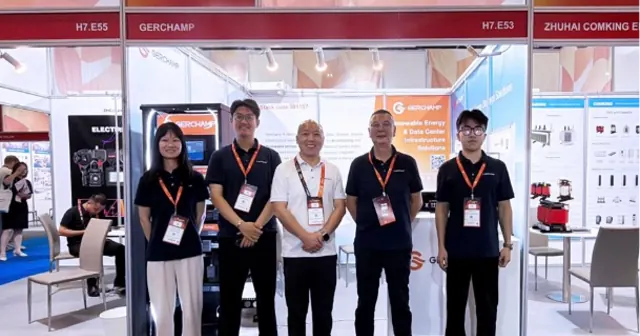
At MEE 2026, Gerchamp showcased innovative nickel-zinc backup power solutions and battery management systems, emphasizing reliability in high-temperature environments.
Read more → -
Blog
Nickel Zinc Battery: Everything You Need to Know and FAQ
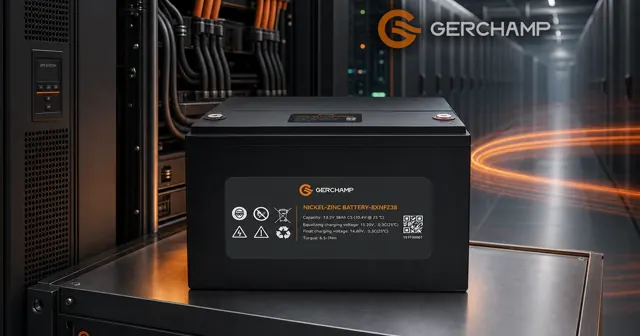
Discover the advantages of nickel zinc batteries for critical infrastructure. Learn how this advanced technology enhances performance and safety in UPS applications.
Read more → -
Blog
NiZn vs Other Battery Technologies: What Data Centers Should Know

Explore the advantages of nickel-zinc batteries for data centers compared to lead-acid, lithium, and other zinc technologies. Understand their unique performance characteristics for UPS applications.
Read more → -
Blog
NiZn vs Other Zinc Technologies: Backup Batteries for Data Center UPS
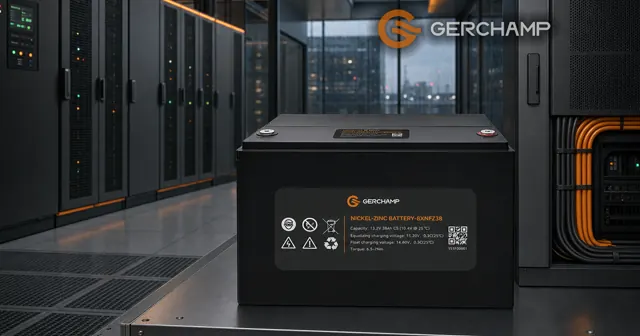
Explore the differences between Nickel-Zinc and other zinc battery technologies for Data Center UPS applications. Understand their unique characteristics and safety features.
Read more → -
Blog
NiZn vs Lithium: Backup Batteries for Data Center UPS
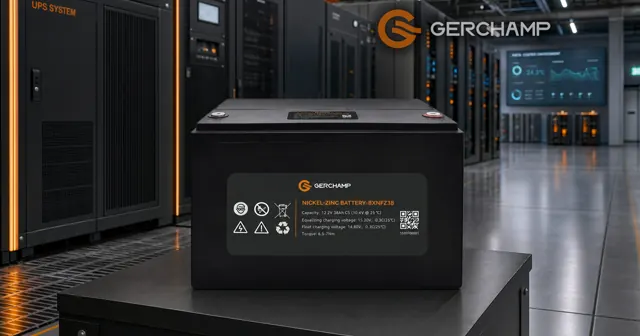
Explore the critical differences between Nickel-Zinc and Lithium batteries for Data Center UPS systems. Understand how safety and system design impact your choice.
Read more → -
Blog
NiZn vs Lead Acid: Backup Batteries for Data Center UPS
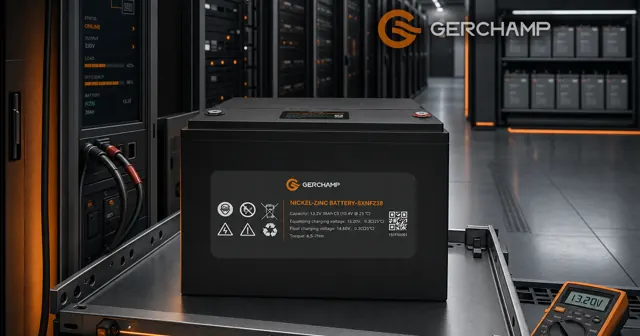
Explore the advantages of Nickel-Zinc batteries over Lead Acid for data center UPS systems. Discover key factors like power delivery, lifecycle, and safety.
Read more → -
Blog
Gerchamp Nickel-Zinc Battery Applications: Where Does NiZn Fit

Explore the diverse applications of Gerchamp Nickel-Zinc Batteries in critical infrastructure, including UPS systems, data centers, and telecom networks.
Read more → -
Blog
Why Is Nickel Zinc Battery Gaining Attention in Critical Power Applications?
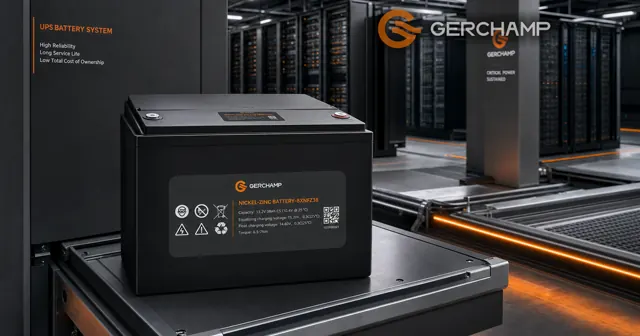
Explore how Nickel Zinc Battery technology is transforming backup power systems for critical applications, enhancing performance, safety, and reliability in modern infrastructure.
Read more →