Simply put, BMS is a dedicated electronic control unit, you can think of it as the intelligent “brain” of a rechargeable battery pack. In my daily work, this system is most commonly used in lithium applications in energy storage systems (ESS).
Its core responsibility is very clear: don’t let the battery “out of the loop”-that is, you must prevent the battery from operating outside the safety limit. The BMS continuously monitors voltage, current, and temperature etc. like an eagle-eye to prevent failures such as overcharge or thermal runaway that can lead to catastrophic consequences. Of course, in addition to the basic life-saving function, it also has to do some fine work, such as optimizing performance through “cell balancing”, accurately calculating the key data of SOC (state of charge) and SOH (state of health), and reporting the real-time state of the battery to the upper host system.
The following is a deeper technical dismantling of the system:
The BMS acts as the central processing unit (CPU) in modern energy solutions. Just like the human brain coordinates body functions, the BMS is responsible for managing the extremely complex electrochemical processes inside the battery pack.
This is particularly critical in large energy storage systems (ESS). Technologically all know that although lithium-ion batteries are highly efficient, their character is actually quite “irritable”. Without the intelligent intervention of BMS, these battery packs cannot work stably at all. The existence of BMS ensures that the battery pack operates as a tight whole, rather than a collection of independent cells that are and unstable.
In the architecture design of BMS, security is always the first priority. The BMS must work tirelessly to keep an eye on the 3 key parameter to ensure that the battery stays within the Safe Operating Area (SOA):

By strictly monitoring these variables, BMS plays a key role in preventing thermal runaway. In our industry, thermal runaway is an absolute nightmare-it’s a chain reaction in which rising temperatures lead to more intense warming, which can eventually lead to catastrophic combustion or explosion of the battery pack. BMS is the firewall that blocks this risk.
The BMS can optimize performance and extend life through Cell Balancing.
The reality is that no two cells are exactly the same; there will always be subtle differences in their capacity or internal resistance due to manufacturing tolerances. If there is no intervention, the “weakest” cell will charge and discharge faster than other cells, thus limiting the available capacity of the entire battery pack (often referred to as the “weakest link” or “bucket effect”).
A high-quality BMS system should not only “protect”, but also “express”. BMS is responsible for accurately calculating the following key data:
Finally, the BMS is also a communication bridge. The data it collects is not isolated locally; instead, it is designed to be sent to users or host systems in real time.
In an energy storage facility, it talks to an inverter or EMS. This data transmission mechanism ensures that the system using the battery can make informed decisions based on the current “fitness” and “health” of the battery.
Yes, this is essential to extend battery life. BMS forces the battery to remain in a “safe working area. Without it, the battery is easily overcharged (which destroys the chemical structure) or deeply discharged (resulting in capacity loss). More importantly, by using cell equalization, BMS ensures that all cells age at the same rate. If there is no such balance, the failure of a single weak cell may cause the entire battery pack to be scrapped in advance. In short, BMS acts as an active guardian, intercepting those injuries that will naturally shorten battery life.

Although the primary goal of these two methods is to level the voltage of all cells in the battery pack, the underlying mechanisms are completely different:
Author:Kevin
I am a Senior Engineer at Gerchamp’s BMS R&D Department with over 12 years of industry experience. I specialize in leading the architecture design and core algorithm development for our advanced Battery Management Systems.
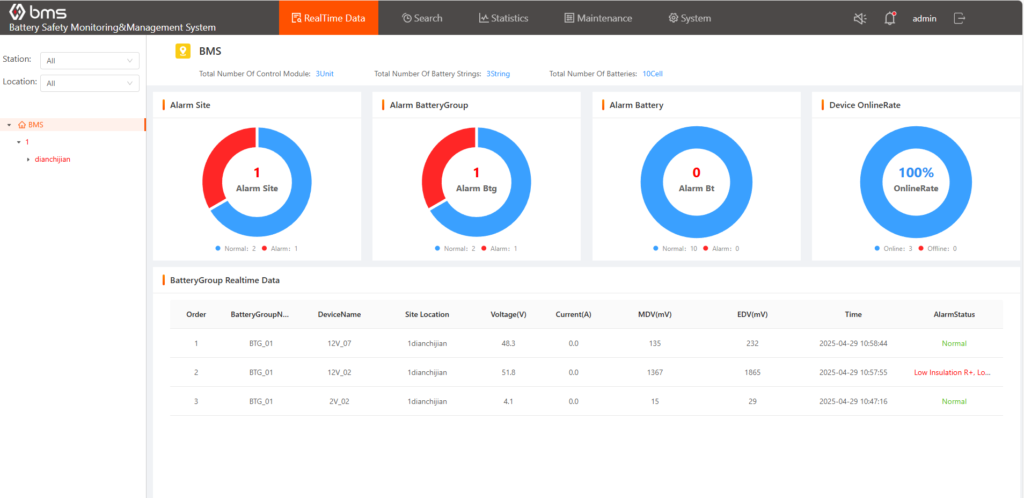
Apply a demo of Gerchamp’s Cloud Platform
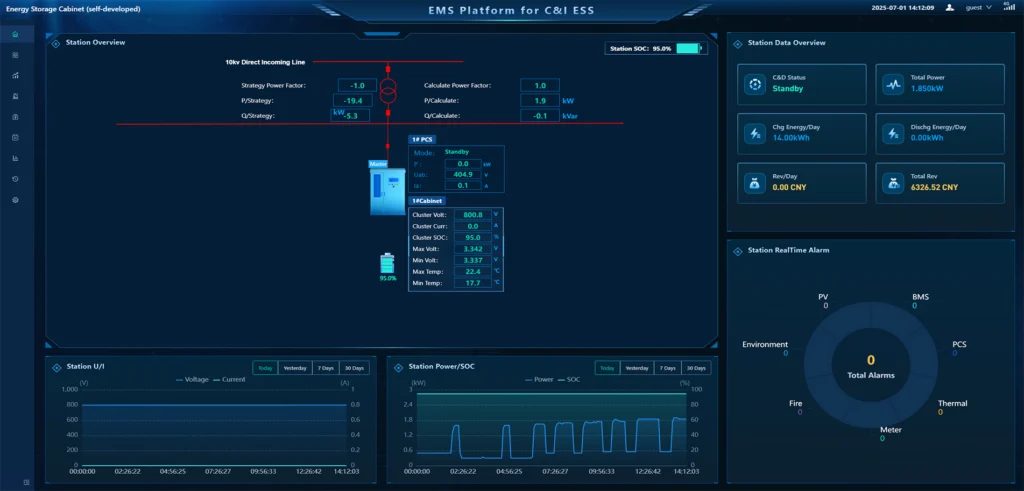
Apply a demo of Gerchamp’s Cloud Platform
 Gerchamp