In recent years, fires and explosions caused by battery thermal runaway have continued to make headlines. At the root of these incidents lies a common issue: today’s mainstream backup battery technologies—such as lead-acid and lithium-ion batteries—carry inherent structural limitations in safety and long-term reliability.
For data centers, where power continuity and operational safety are non-negotiable, such risks can quickly escalate from equipment damage to service disruption—and in the worst cases, system-wide failures with severe consequences.
Lead-Acid Batteries: Gradual Thermal Runaway Driven by Heat Accumulation
Thermal runaway in lead-acid batteries is rarely sudden. Instead, it is typically a slow, progressive process that worsens over time.
In sealed lead-acid batteries, increased gas generation during charging leads to oxygen recombination at the negative plate, forming water. While this oxygen recombination helps reduce water loss, it generates significantly more heat than normal charging. As a result, oxygen recombination becomes a double-edged sword: it extends maintenance intervals, but continuously raises the internal battery temperature.
Under constant-voltage charging conditions, the oxygen recombination current contributes to the total charging current, slowing its natural decline. Rising battery temperature further suppresses current decay and may even cause the charging current to rebound. This creates a positive feedback loop—higher current generates more heat, which in turn drives the current higher—until the system reaches its current limit.
Sustained high temperatures combined with internal pressure buildup can lead to casing softening, deformation, swelling, venting, or failure. In data center environments, this may result in electrolyte leakage, short circuits, and ultimately fire hazards.
Lithium Batteries: High Energy Density with Violent Thermal Runaway Risks
Compared with lead-acid batteries, lithium-ion batteries present risks that are far more sudden and destructive.
When lithium ions intercalate into graphite anodes, the material becomes highly reactive. At the same time, lithium battery electrolytes are organic solvents with ignition points comparable to gasoline. In the event of internal short circuits, overcharging, or external thermal stress, ignition can occur rapidly.
In addition, commonly used ternary cathode materials release oxygen at temperatures around 200–300°C, feeding combustion and significantly intensifying fire and explosion risks. Even lithium iron phosphate (LFP), often regarded as a safer chemistry, has oxygen release temperatures in the 700–800°C range and still cannot fully eliminate safety incidents in enclosed, poorly ventilated data center environments.
When lithium batteries are deployed at scale, individual cell risks are amplified into system-level fire hazards—often with consequences far exceeding the value of the batteries themselves.
Why Do We Still Need Nickel-Zinc Batteries?
Whether lead-acid or lithium-based, thermal runaway remains a critical vulnerability—one that poses severe threats to data center operations. At best, failures increase maintenance costs and shorten asset life; at worst, they result in fires, explosions, and major safety incidents.
Nickel-zinc batteries address this challenge by entering applications where high reliability, intrinsic safety, fast response, and low operational risk are essential. In data centers, industrial parks, rail systems, and other critical infrastructure, backup power is not simply one option among many—it must be predictable, controllable, and fail-safe. In these environments, nickel-zinc batteries are often not just an alternative, but the right-fit solution.
What Is a Nickel-Zinc Battery?
Using Gerchamp nickel-zinc batteries as an example, this technology is fundamentally a water-based alkaline rechargeable battery:
Nickel-zinc batteries typically operate at a nominal voltage of ~1.65V, with a practical energy density of 60–100 Wh/kg and a cycle life of up to 500 cycles. They support wide operating temperatures from -20°C to 55°C, enable high-rate discharge up to 10C, and use environmentally friendly, recyclable materials.
During discharge, the cathode undergoes a reduction reaction (NiOOH), while zinc at the anode converts into zinc hydroxide to release energy.
Crucially, metallic zinc is stable in air and does not react violently with water, enabling the use of a water-based electrolyte. From a physicochemical standpoint, this electrolyte inherently suppresses combustion, fundamentally eliminating the possibility of fire or thermal runaway. This is the foundation of nickel-zinc batteries’ exceptionally high intrinsic safety.
Core Advantages of Nickel-Zinc Batteries for Data Center Backup Power
The most significant advantage of nickel-zinc batteries is their intrinsic safety. As water-based rechargeable systems with non-flammable electrolytes, they do not experience thermal runaway—even under extreme conditions such as overcharging, short circuits, or physical damage.
This makes them particularly well suited for environments that are highly sensitive to fire risk, including data centers and telecom facilities.
That said, high intrinsic safety does not eliminate the need for system-level risk management. Even with nickel-zinc batteries, additional engineering measures remain important, such as:
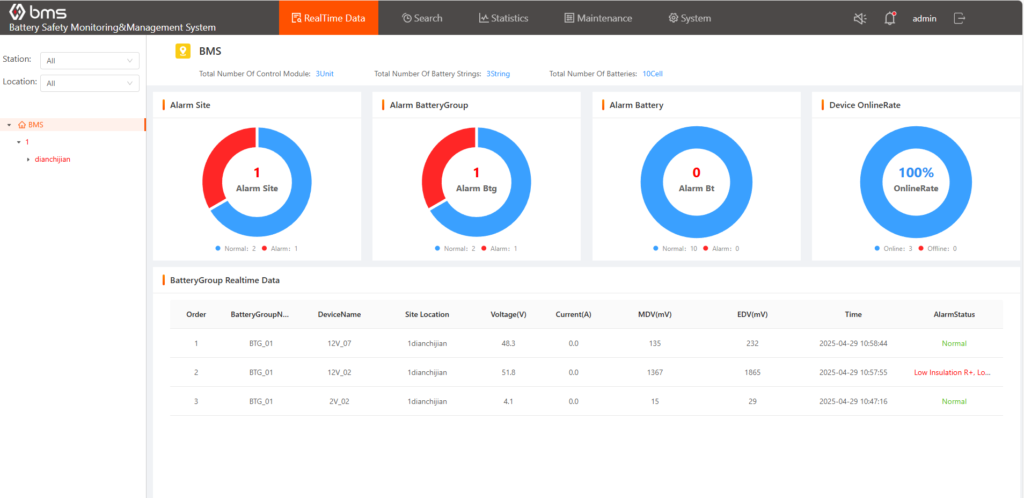
Apply a demo of Gerchamp’s Cloud Platform
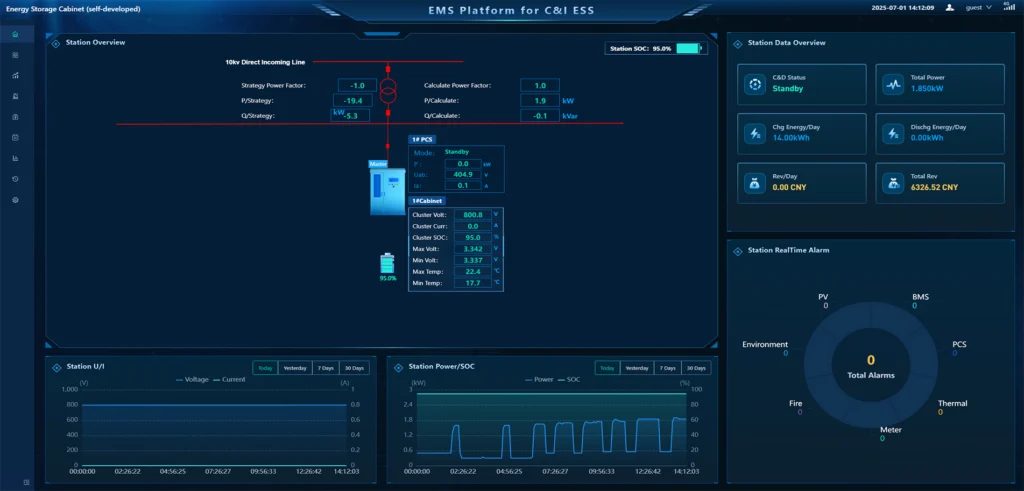
Apply a demo of Gerchamp’s Cloud Platform
 Gerchamp