Simply put, the C-rate describes the speed of the charge and discharge current relative to the rated capacity of the battery (in ampere hours, Ah).
Specific to the engineering definition: 1C-rate means that the charge and discharge current will completely use up or fully charge the battery within exactly one hour. For example, a 100Ah battery is discharged at 1C, the current is 100A, and the duration is 60 minutes. In high-demand industrial applications such as data center UPS, Energy Storage Systems (ESS), or telecommunications base stations, the C-rate is not a simple multiple; it is a core design constraint. The C-rate directly determines the system’s thermal management limit, internal resistance caused by the Joule heat scale, and even affects the battery management system (BMS) SoC (state of charge) estimation accuracy. High-rate operation will significantly accelerate the chemical degradation of the battery core. If it is not matched with accurate monitoring, the risk of thermal runaway will increase exponentially.
To fully understand C-rate, we must see the linear relationship between current, capacity and time. In the day-to-day calculation of system Runtime, this is the formula most commonly used by our engineers.
In the data center UPS scenario, batteries often face extremely high C-rate challenges (usually 4C or higher). Although it may only need to be supported for a few minutes, the system must deliver a high-current burst at the moment of the mains interruption. This is why we give priority to power cells rather than capacity cells when selecting models in this scenario.
According to Joule’s law (P=I2R), the heat generated inside the battery is proportional to the square of the current. When the battery is operated at high C-rate, the internal resistance (IR) can cause significant heat build-up. If the C-rate exceeds the design threshold of the cell, it will trigger a series of chain reactions:
When designing large-scale energy storage systems (ESS), the selection of chillers and air channels basically follows the preset maximum C-rate.
C-rate is one of the factors that determine how long a battery cycle life. High rate charge and discharge will bring huge mechanical stress to the electrode material.
For telecommunications base stations or industrial backup systems, to keep the design life of 10 or even 15 years, controlling the average C-rate within the optimization range is the core.
In modern battery technology, the BMS is the “brain” that monitors the C-rate in real time. Usually I ask the BMS to do two things for high magnification scenarios:
Whether it is a data center UPS, ESS or telecommunications industry, C-rates are the soul indicators that define system performance. It not only determines how much power you can “squeeze”, but also determines what kind of cooling system you need to configure, and the final payback period of the battery. According to the peak demand of the actual application scenario, matching the battery with the corresponding C-rate capacity is the only way to achieve safety, reliability and optimize the total cost of ownership (TCO).
Author : Caleb
I am the BMS Project Manager at Gerchamp. With nine years of experience in the electrical and battery industries, I specialize in critical data center power solutions. I have led teams in executing large-scale BMS installations for major domestic and international clients, including Alibaba, ensuring the safe integration and precise management of advanced battery power systems.
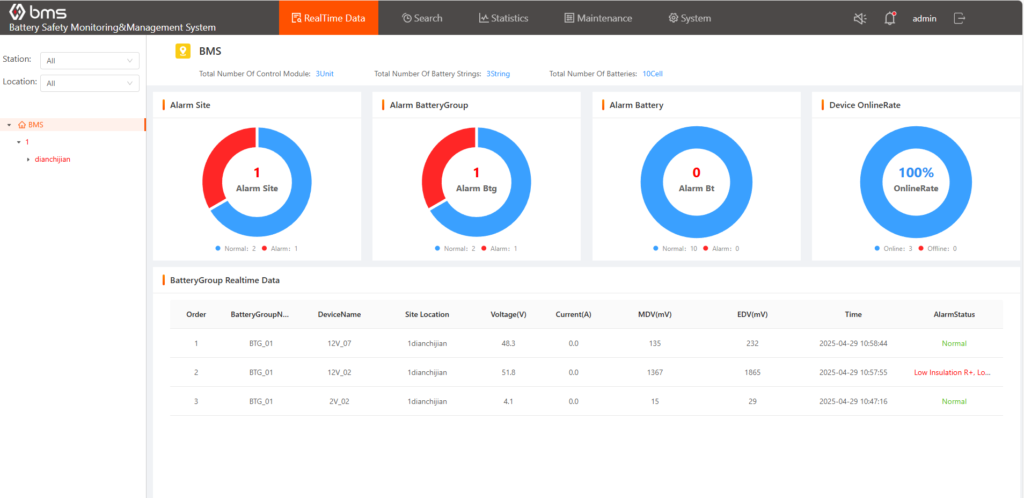
Apply a demo of Gerchamp’s Cloud Platform
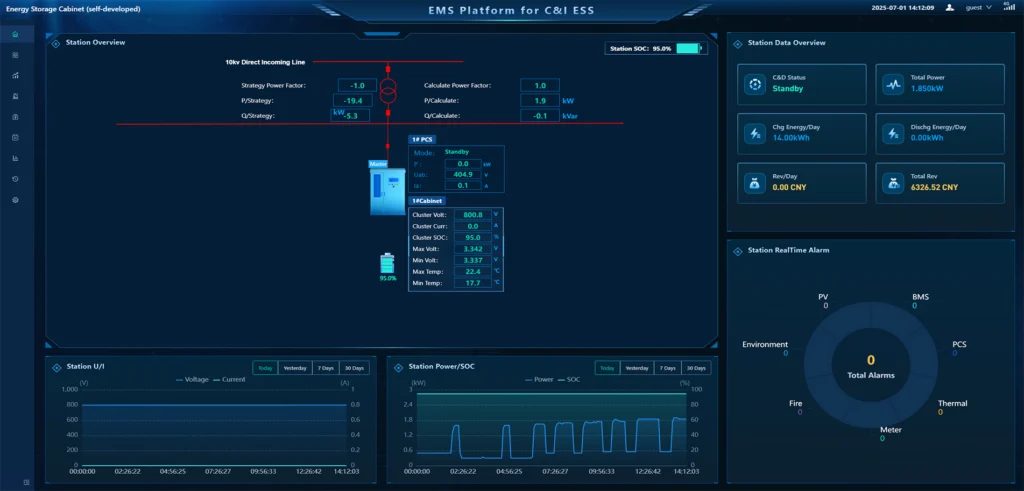
Apply a demo of Gerchamp’s Cloud Platform
 Gerchamp