Battery Aging is actually an irreversible decline in the electrochemical performance of the battery. It is mainly manifested in two hard indicators: capacity attenuation , that is, the total energy storage becomes less; and the significant increase in internal resistance, resulting in a significant reduction in power output efficiency.
For peers responsible for the operation and maintenance of UPS systems or energy storage power stations, battery aging directly corresponds to the decline in SOH (state of health). The physical logic behind this is actually the “self-depletion” of internal chemical mechanisms-such as electrolyte decomposition, sulfation of lead-acid batteries, or continuous thickening of the SEI film of lithium batteries. These processes continuously consume the active materials inside the battery. If the system operates at high ambient temperatures, excessive Depth of Discharge (DoD), or frequent cycles, the aging rate will significantly exceed the nominal values stated in the manual.
An aging battery is a “weak ring” in the system. It is not only a problem that performance cannot keep up, but also increases the probability of system collapse or even thermal runaway during power-off switching. Figuring out aging isn’t about academic research, it’s about moving from “passive replacement” to “data-driven preventive maintenance.
To assess the state of battery health, we must monitor two core indicators: Capacity Fade and Internal Resistance.
Capacity Fade: This means that the amount of power that the battery can store is actually less. Over time, the active substances in the electrode that are responsible for transporting energy will gradually degrade or wear out. For critical UPS systems, this means that your backup power support time is shortened, and this reduction is often fatal.
Increased internal resistance: As the battery “ages”, its internal current flow path will become obstructed. Once the internal resistance rises, the battery must face greater impedance when outputting the same power, thus generating more heat. In the case of high current discharge, this cliff-like decline in efficiency is particularly obvious.
Battery aging is essentially a collapse at the electrochemical level. According to the different types of batteries in your Data Center, the specific method of aging is also different:
Lead-acid batteries: In this type of battery, aging is often manifested in the formation of lead sulfate crystals on the plates, which is commonly referred to as “sulfation”,which leads to a significant reduction in the effective surface area available for chemical reactions.
Lithium-ion batteries: The aging of lithium batteries is usually driven by the growth of the SEI film (solid electrolyte interface film) on the surface of the negative electrode. Although a thin layer of SEI film is a necessary protective layer, if it keeps growing, it will consume lithium ions crazily and block the channel.
Electrolyte drying/decomposition: No matter what kind of battery, the electrolyte will dry up or decompose over time. Without this medium, the ion transmission will be completely broken.
Although aging is inevitable, the speed of aging depends on our operation and maintenance posture. We must focus on these core factors:
Ambient temperature: High temperature is the number one natural enemy of battery life. As soon as the temperature is high, the internal chemical reaction will intensify, and the aging will directly enter the fast forward mode.
Depth of Discharge: Frequently draining the battery completely puts tremendous mechanical stress on the internal structure. Compared with shallow charge and shallow discharge, the damage of deep discharge to the battery is exponential.
Charge-discharge cycles: Each cycle is accompanied by physical expansion and contraction of the electrode. This cyclic mechanical stress eventually causes the active substance to fall off, resulting in irreversible loss.
From the perspective of safety management, aging batteries are the “time bomb” in the entire power infrastructure. It is not only weak performance, but more serious is that it is very easy to cause thermal runaway-that is, the battery enters an uncontrollable self-heating cycle, and even leads to fire and explosion.
In order to avoid these risks, the current intelligent stations are no longer engaged in the reactive maintenance practices. By introducing a specialized battery monitor system like Gerchamp, we can enable data-driven predictive maintenance.
An excellent BMS can continuously monitor internal resistance, voltage and negative terminal temperature at the individual battery. Through the trend analysis of these data, the system can give an accurate SOH assessment. Before the battery really fails and drags down the entire system, we have already caught those problems through data and completed early warning.
Author : Caleb
I am the BMS Project Manager at Gerchamp. With nine years of experience in the electrical and battery industries, I specialize in critical data center power solutions. I have led teams in executing hyperscale BMS installations for major domestic and international clients, including Alibaba, ensuring the safe integration and precise management of advanced battery power systems.
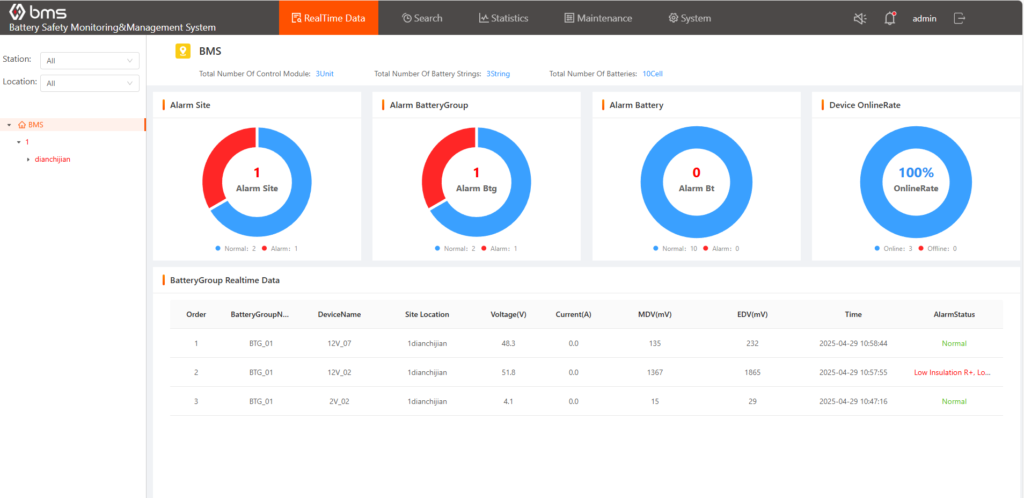
Apply a demo of Gerchamp’s Cloud Platform
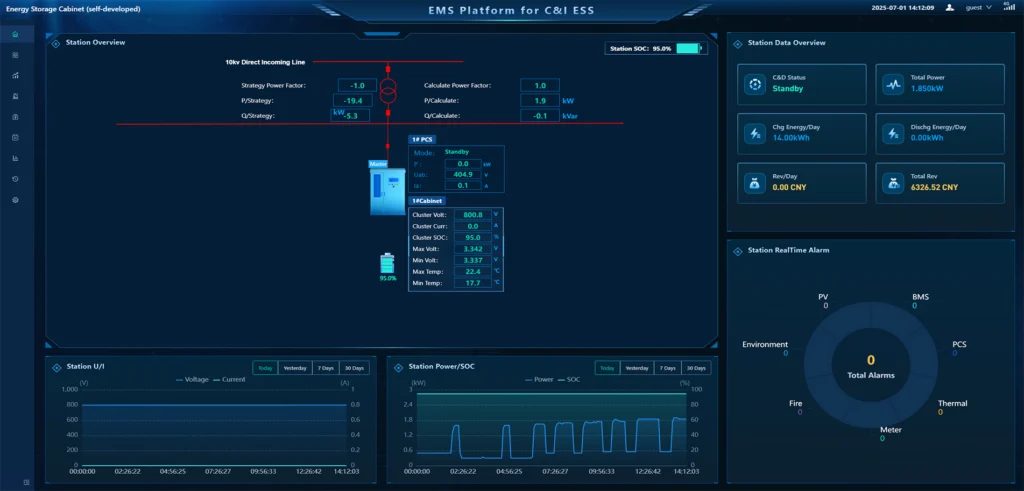
Apply a demo of Gerchamp’s Cloud Platform
 Gerchamp