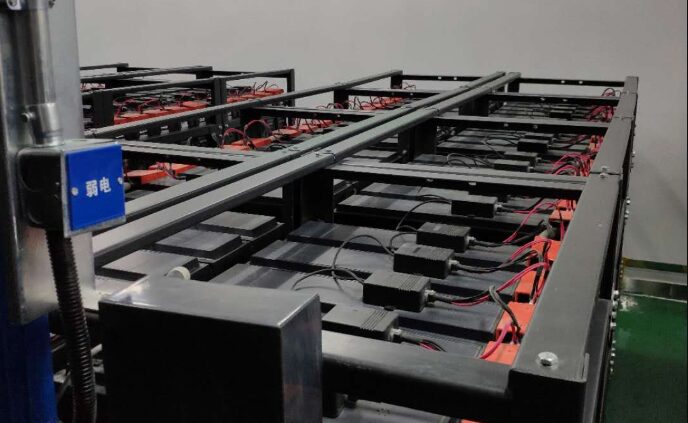
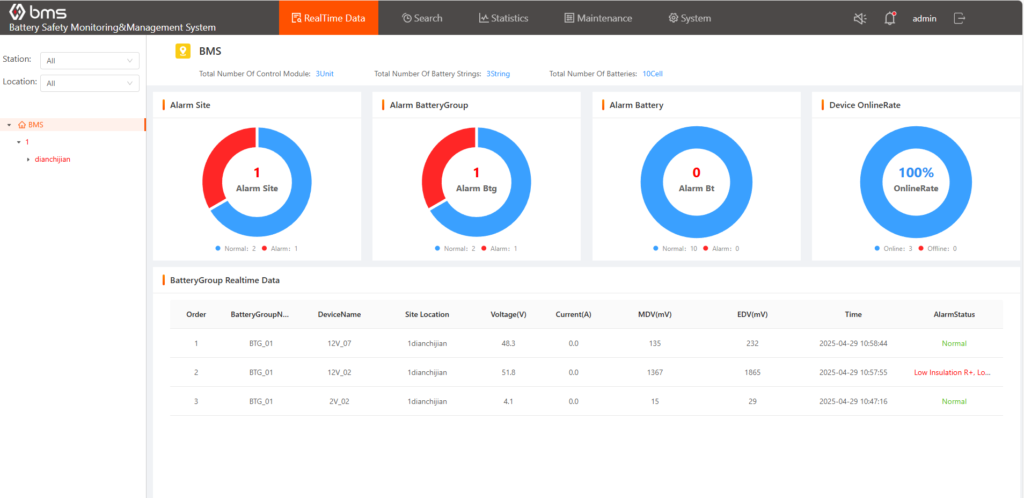
In the realm of critical infrastructure, the term “Data Center BMS” often causes confusion. While typically referring to a Building Management System (for HVAC and lighting), in the context of power backup, we are referring to a dedicated Battery Monitoring System. Unlike general building controls, this system is specifically designed to safeguard the reliability of UPS Lead-Acid battery packs. It connects directly to each individual battery, monitoring vital signs such as internal resistance, voltage, negative terminal temperature, and ripple current in real time. The core mission is clear: to prevent data center downtime caused by battery failure. It transforms maintenance from a “reactive, manual” approach to a “proactive, automated” strategy. Simply put, it ensures the power system is 100% ready to perform during critical moments.
This is recognized as a “golden indicator” to judge the true health of the battery “. As the battery ages, the internal structure corrodes and the internal resistance increases. Why is this important: Most of the time, the voltage of the battery looks quite normal in the floating state, but once it is loaded, the high internal resistance will cause it to “fail under load” instantly “. By tracking this trend, BMS (Battery Monitoring System) can predict failures in advance before the load fail critically.
The BMS (Battery Monitoring System) must monitor the voltage of each battery, not just the entire set. Why this is important: as long as there is a low voltage battery in whole set, it will drag down other healthy batteries, or force the charger to overcharge other batteries in order to pull it up, resulting in premature aging of the whole battery set.
Professional data center BMS (Battery Monitoring System) will attach the sensor directly to the negative terminal of the battery. Why this is important: The internal temperature of the battery is an outpost of thermal runaway. This a very dangerous state in which the heat generated by the battery exceeds its ability to dissipate heat, which may cause a fire or explosion. Real-time thermal monitoring is our first line of defense against this kind of catastrophe.
This refers to the residual AC that flows into the DC battery circuit. Why this is important: Excessive ripple current will cause internal heating of the battery and accelerate the corrosion of the plates. If we detect this data anomaly, it usually means that there may be a problem with the upstream UPS or rectifier, so we have to check it quickly.
The data center BMS (Battery Monitoring System) changes maintenance from “manual, passive” to “automatic, predictive”, which is its greatest value to operators.
In the traditional mode, technicians take a hand-held tester to do preventive maintenance (PM) once every quarter or six months. Risk: There is a huge blind spot of 3 to 6 months. Some battery open may be a matter of weeks. If the mains power is cut off during this period, UPS will not be able to fail to initialize.
Data center BMS (Battery Monitoring System) is 7x 24 hours a day, all year round. It’s crawling data every few seconds. Solution: By analyzing the trend of internal resistance and temperature, the system algorithm can accurately predict which battery is going to run out. This means that operators can replace only those parts that have problems, instead of guessing, ensuring that the stored energy is always on standby.
Author : Caleb
I am the BMS Project Manager at Gerchamp. With nine years of experience in the electrical and battery industries, I specialize in critical data center power solutions. I have led teams in executing large-scale BMS installations for major domestic and international clients, including Alibaba, ensuring the safe integration and precise management of advanced battery power systems.nce. I specialize in leading the architecture design and core algorithm development for our advanced Battery Management Systems.
Apply a demo of Gerchamp’s Cloud Platform
Apply a demo of Gerchamp’s Cloud Platform
 Gerchamp