The UPS (Uninterruptible Power Supply) batteries are the critical energy storage components within a backup power system. Their primary purpose is to provide immediate, short-term power to critical infrastructure—such as data centers and telecom base stations—during a power outage or severe voltage spikes. They work by continuously storing direct current (DC) power converted from the grid via a rectifier. When utility power fails, the system’s inverter immediately begins to convert this stored DC power back into stable alternating current (AC) power in milliseconds, ensuring zero unexpected downtime before heavy-duty standby generators can take over.
In theory, the utility grid should provide perfect, uninterrupted power. However, in our actual operation and maintenance site, commercial electricity is prone to voltage fluctuations, surges, voltage drops, and sudden power outages. The existence of UPS batteries is basically to fill that fatal power gap. When a complete power outage occurs, it will take several seconds or even minutes for the huge diesel generators outside to complete the start, synchronize and then stabilize the output. But for highly sensitive servers, even a few tenths of a second of a power outage is enough to cause a complete system crash.
UPS batteries are specially used to fill this pit. They act as a safety net of last resort, keeping your servers, network switches, and core enterprise IT systems online with almost “invisible” seamless switching. Avoiding unexpected downtime not only preserves data integrity and prevents hardware from burning out, but also helps businesses avoid devastating financial and reputational damage. In the face of the crisis, UPS batteries buy our most valuable asset: time.
Its working principle depends on the continuous conversion between alternating current (AC) and direct current (DC) without any flaw.
Charging phase (rectifier): The IT equipment in the data center eats alternating current from the power grid, but the battery can only store direct current in the form of chemical energy. When the mains supply is normal, the UPS system uses a rectifier to convert the incoming alternating current into direct current. This continuous current input allows the battery to remain fully charged and activated, ready to be topped up at any time.
Discharge phase (inverter): As long as the system is aware of a power outage or dangerous voltage spike, it will immediately cut off its dependence on the grid, and the battery will instantly start to release the stored direct current. At this time, the inverter immediately takes over and converts the direct current into clean and stabilized alternating current to feed the server.
Millisecond switching: from mains to battery, the entire process occurs within a few milliseconds (if it is a double conversion online UPS system, it can even achieve zero conversion time). The speed is so fast that your underlying equipment cannot even notice that the mains has been cut off.
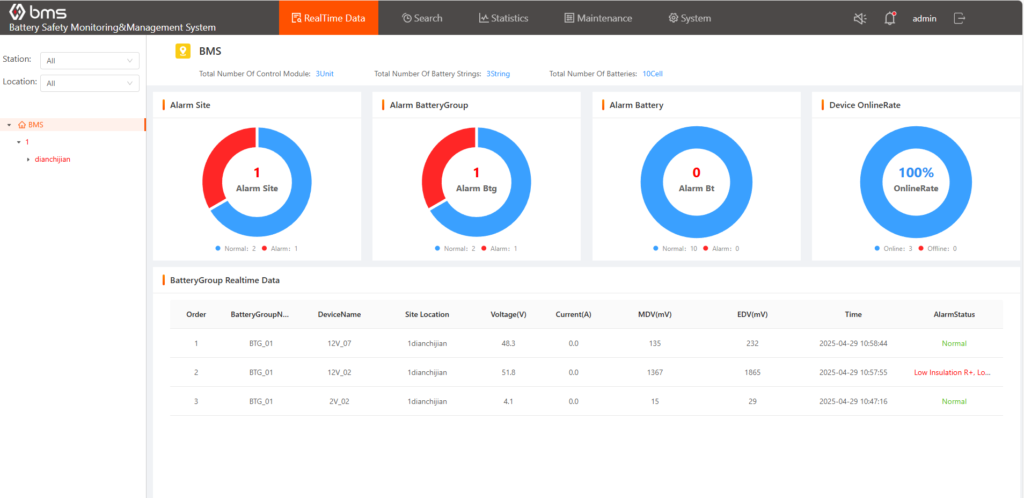
While a UPS system is the first line of defense against power failure, the reliability of that defense rests entirely on the health of the batteries within. This is why intelligent battery monitoring systems are essential to ensure the UPS is always ready when needed most.
Author : Caleb
I am the BMS Project Manager at Gerchamp. With nine years of experience in the electrical and battery industries, I specialize in critical data center power solutions. I have led teams in executing large-scale BMS installations for major domestic and international clients, including Alibaba, ensuring the safe integration and precise management of advanced battery power systems.
Apply a demo of Gerchamp’s Cloud Platform
Apply a demo of Gerchamp’s Cloud Platform
 Gerchamp