To achieve truly effective telecom battery monitoring, operation and maintenance engineers must build a round-the-clock automated battery monitoring system (BMS). The core of this system must monitor three key indicators: internal resistance (IR), monomer voltage and temperature. Whether it is the traditional lead-acid battery or the current lithium iron phosphate (LiFePO4), through the central gateway to summarize the battery pack data, we can accurately calculate the battery’s state of health (SOH) and state of charge (SOC).
This shift from “repair after accident” to “predictive maintenance” is the only way to ensure that 100 percent of the remote base station (BTS) is online, and it can also prevent catastrophic thermal runaway at the source. This logic can usually extend battery life , not to mention how much it can reducing on-site truck rolls and routine maintenance costs.

Traditional battery maintenance in the telecommunications industry relies too much on regular manual measurements. This method is extremely inefficient, because manual inspection is only a “snapshot” and cannot capture the sudden deterioration of battery performance. Our telecom battery monitoring solutions have replaced this physical activity with continuous, automated data collection. By deploying dedicated battery sensors at each node, the system provides a very granular view of the entire energy storage infrastructure. For those remote base stations with inconvenient traffic and high power outages, this improvement in the monitoring dimension is almost life-saving.
To maintain the resilience of the network, the BMS must keep an eye on the 3 core “vital signs” of each battery:
A set of telecom battery monitoring system is good or not, all look at its architecture logic. Which utilizes a central gateway (control module) to act as the brain:
In this way, the operation and maintenance engineer sits in the office, and a large screen can stare at the status of thousands of sites.
The real power of automated BMS is to turn boring raw data into insights that can guide action. Through the algorithm of voltage and resistance data processing, the system can calculate:
This predictive power allows maintenance to be advanced by weeks or even months. Before the power grid goes down, you already know whether the backup power supply is reliable or not.
Landing a set of high-quality battery monitoring solutions, the return is very intuitive:
Author : Caleb
I am the BMS Project Manager at Gerchamp. With nine years of experience in the electrical and battery industries, I specialize in critical data center power solutions. I have led teams in executing large-scale BMS installations for major domestic and international clients, including Alibaba, ensuring the safe integration and precise management of advanced battery power systems.rnational clients, including Alibaba, ensuring the safe integration and precise management of advanced battery power systems.
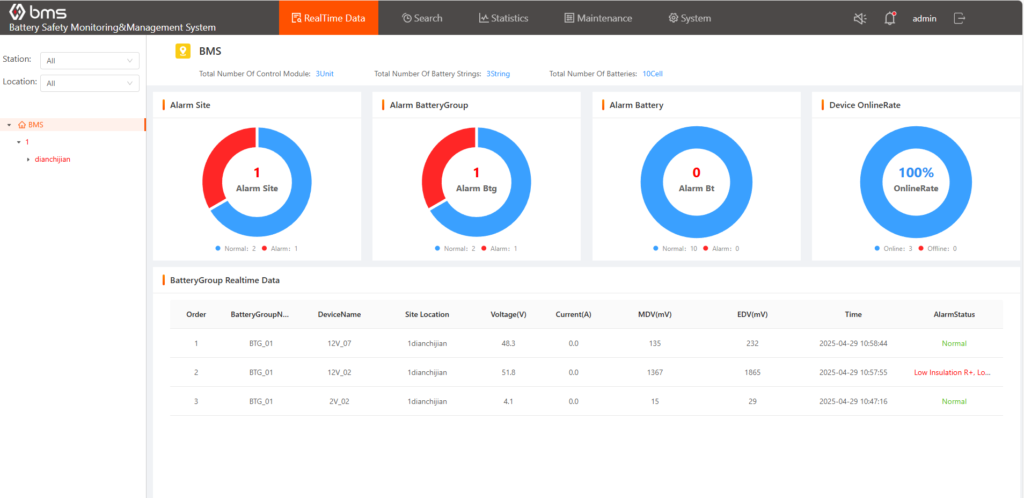
Apply a demo of Gerchamp’s Cloud Platform
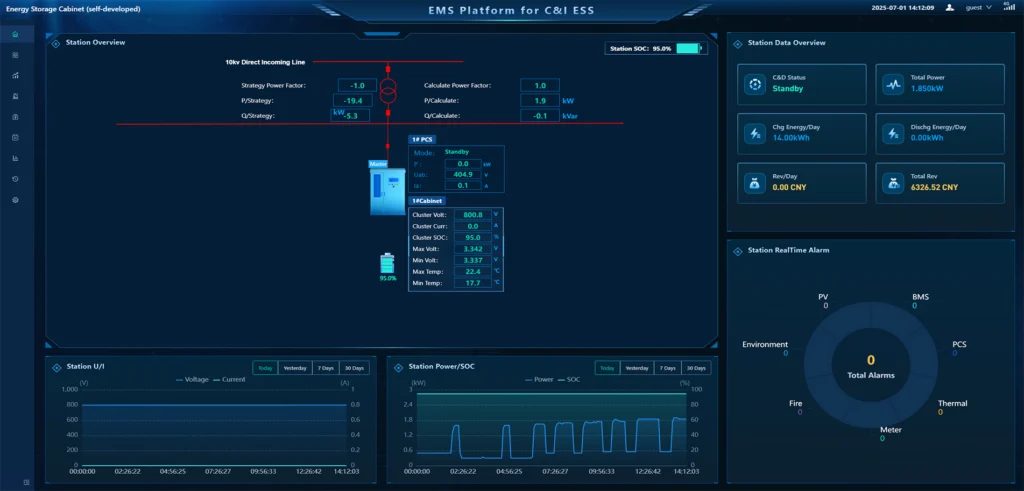
Apply a demo of Gerchamp’s Cloud Platform
 Gerchamp