Battery status is a comprehensive indicator that reflects both a battery’s current performance and its long-term usability.
For end users, it often appears as a simple “battery percentage” on a screen. In reality, however, battery status encompasses multiple critical dimensions. Voltage, current, temperature, and other key signals should be 24/7 monitored and integrated to deliver a holistic assessment and proactive control of battery status. This is where the Battery Management System (BMS) comes into play.
Core Evaluation Dimensions of a BMS
1. Voltage Monitoring
Voltage is one of the most direct and essential battery parameters. Using high-precision sensors, the BMS continuously monitors the voltage of each individual cell. These readings provide immediate insight into the battery’s charge and discharge conditions, as well as potential risks. E.g., Overvoltage may indicate overcharging risks, Undervoltage can signal excessive discharge.
In addition to cell-level voltage, the BMS also monitors total pack voltage, enabling a system-level evaluation and supporting informed control strategies.
2. Current Measurement
The BMS tracks both the magnitude and direction of charge and discharge current in real time. Accurate current measurement is the foundation for:
For safety-critical scenarios, the BMS is also capable of detecting abnormally high currents, such as short circuits. Upon identifying a hazard, it can immediately initiate protective actions — including circuit isolation — to prevent overheating, fire, or other severe incidents.
3. Thermal Management
Battery temperature has a significant impact on performance, lifespan, and safety. The BMS continuously monitors temperature through sensors placed at critical locations within the battery pack.
When abnormal temperatures are detected, the BMS responds accordingly — for example, suspending charging operations under excessive heat — to ensure safe operation.
Advanced BMS Analytics: State Estimation
Beyond basic parameter acquisition, modern BMS platforms employ advanced algorithms to estimate key battery states that cannot be measured directly.
SOC (State of Charge) Estimation
To enhance SOC accuracy, the BMS combines multiple methodologies:
SOH (State of Health) Assessment
SOH evaluation provides critical insight into battery aging and degradation. The BMS typically assesses SOH through:
Why Battery Status Matters
Through real-time monitoring, intelligent estimation, and precise control, the BMS plays a vital role in:
Ultimately, a well-designed BMS ensures that batteries operate safely, efficiently, and consistently across diverse application scenarios — from energy storage to electric mobility.
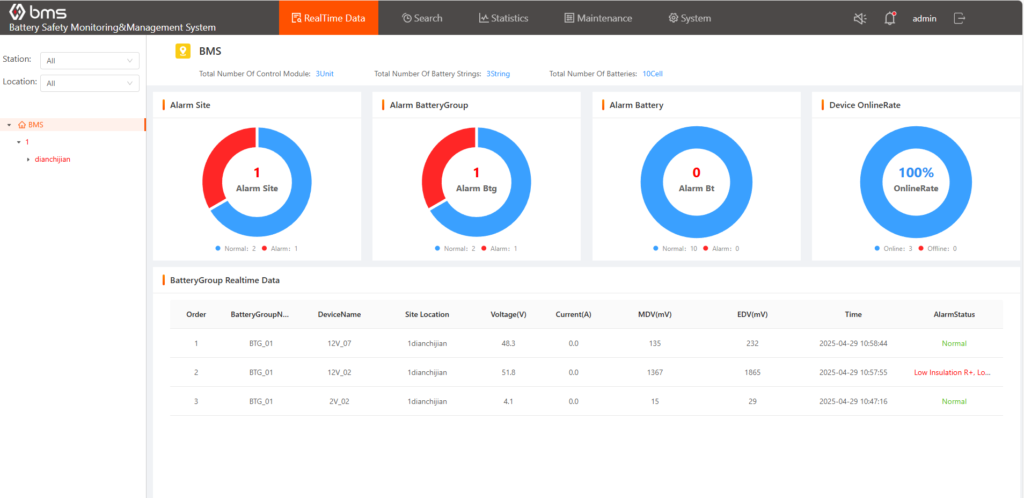
Apply a demo of Gerchamp’s Cloud Platform
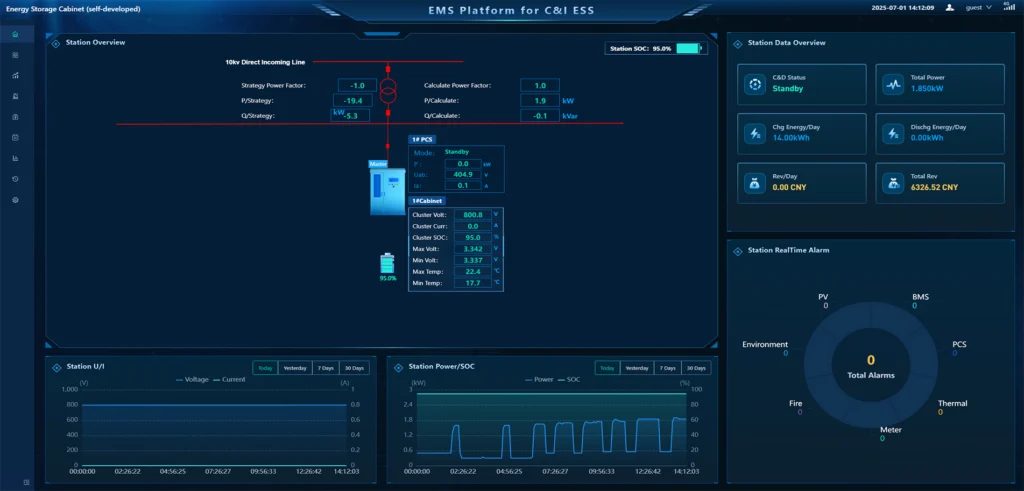
Apply a demo of Gerchamp’s Cloud Platform
 Gerchamp