When selecting a BMS for battery pack, the first reaction of many people is to look at the current rating. But, if your selection priority is not security architecture and data intelligence, then the subsequent project landing will be very painful.
A professional selection process must include these 3 steps: chemical system and voltage matching, predictive protection, system integration.
When we talk about “how to choose bms for battery pack”, the first technical threshold is to confirm whether the electrochemical characteristics of BMS firmware and battery cells are “strictly compatible”. The charge-discharge curves of different battery chemical systems are very different. You cannot simply use it interchangeably between different systems:
Lithium Iron Phosphate (LiFePO4): Its discharge voltage platform is very flat. This requires the BMS to have a very high accuracy voltage detection capability. If the sampling accuracy is not enough, relying on voltage alone to estimate SOC in LFP is technically impossible in the middle-range. The BMS must also utilize advanced algorithms (such as Kalman Filtering) and Coulomb counting.
NMC: Due to its high energy density and less thermal stability than LFP,NMC has extremely strict requirements on the thermal management logic inside the BMS and must be more sensitive.
Traditional systems: For older systems such as lead-acid for specialty industrial backup, the BMS must support a specific charge equalization algorithm, primarily to prevent sulfation or dendrite growth.
In addition, for industrial and commercial energy storage systems (ESS), voltage architectureis also important. C & I applications usually run under a high-voltage series architecture even up to 1000V. Therefore, the BMS you choose must be designed with high-voltage isolation and insulation monitoring functions. This is about bottom line safety-preventing dangerous arcing and ensuring the safety of the entire string of batteries. evolve.
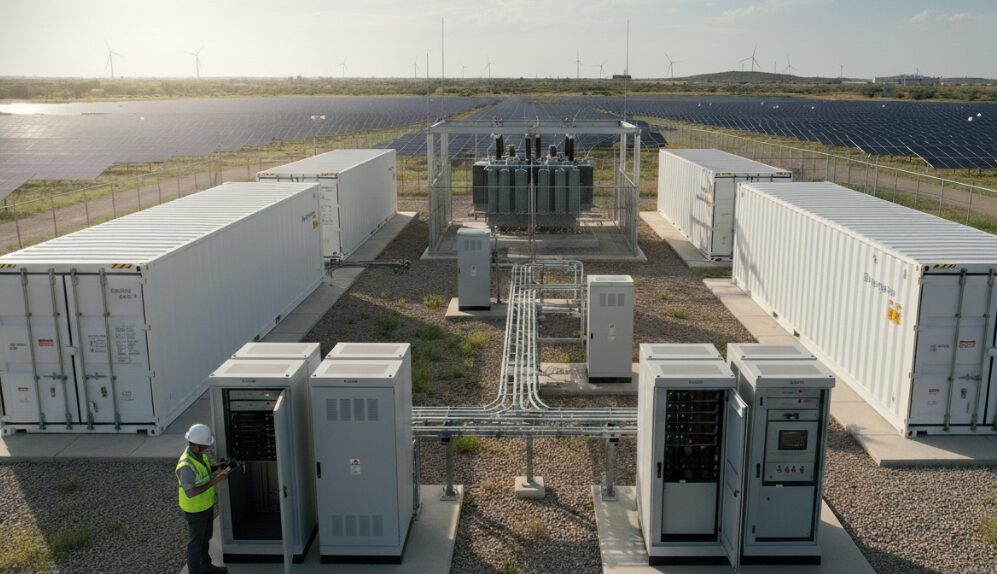
The difference between an ordinary circuit protection board and a professional Smart BMS is whether it has predictive protection capabilities. To select a high-value battery pack, you can’t just stare at the basic cut-off function of overcurrent or overvoltage. Really effective protection depends on data intelligence:
Cell-level monitoring: BMS must monitor the voltage and temperature of each string cell, rather than just looking at the average value of the battery pack. This granularity allows the system to recognize a single cell when it first starts to fail, rather than waiting until it drags down the entire battery pack.
Thermal runaway algorithm: advanced BMS units are in use dT/dt (temperature rise rate) algorithm. This means that the system does not wait until the temperature exceeds the limit to alarm, but analyzes the rate of temperature rise. Once the abnormal temperature rise trend is found, immediately trigger cooling or cut off the battery string.
Equalization Strategy:
Passive Equalization remains the industry standard for most new C&I systems due to its cost-effectiveness and high reliability when using consistent, tier-1 cells.
Active Equalization is recommended for high-capacity systems or “second-life” (used) battery applications. While it maximizes available capacity by transferring energy between cells, it adds complexity and cost, which must be weighed against the project’s ROI.
The battery pack does not operate in a vacuum, it is part of the entire ecosystem (including inverters, chargers, and EMS). You must repeatedly confirm that the BMS supports the industrial communication protocols required in the field:
PCS integration: BMS must be able to smoothly “handshake” with PCS (energy storage converter). Usually this requires the CAN Bus or Modbus TCP/RTU protocol. If the BMS cannot accurately communicate the SOC and power limit to the PCS, the inverter will overcharge or overdischarge the battery like a headless fly. This will not only directly lead to the failure of quality assurance, but also bring serious security risks.
To sum up: only by closely following these three pillars-chemical/voltage matching, predictive safety logic, and protocol integration capabilities, can you ensure that the selected solution is a safe, reliable and long-term energy storage asset.
Author: Kevin
I am a Senior Engineer at Gerchamp’s BMS R&D Department with over 12 years of industry experience. I specialize in leading the architecture design and core algorithm development for our advanced Battery Management Systems.
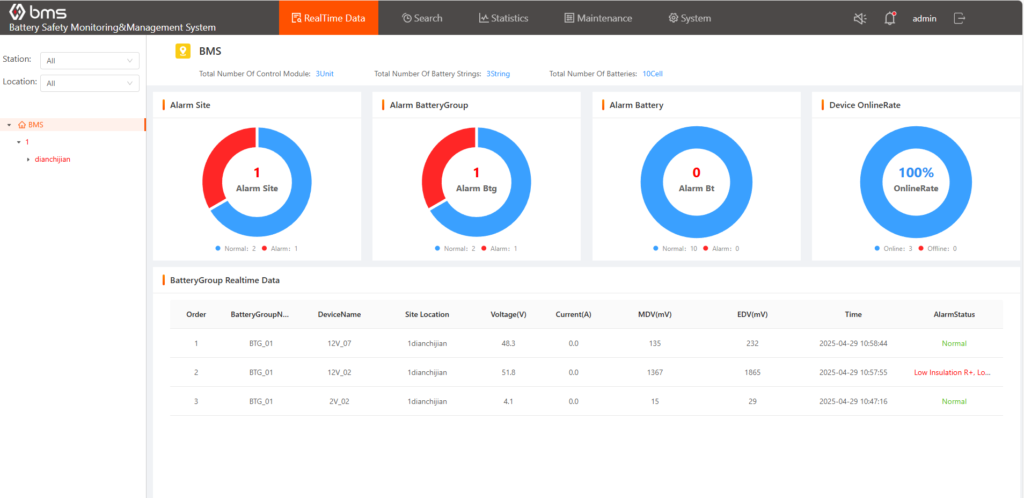
Apply a demo of Gerchamp’s Cloud Platform
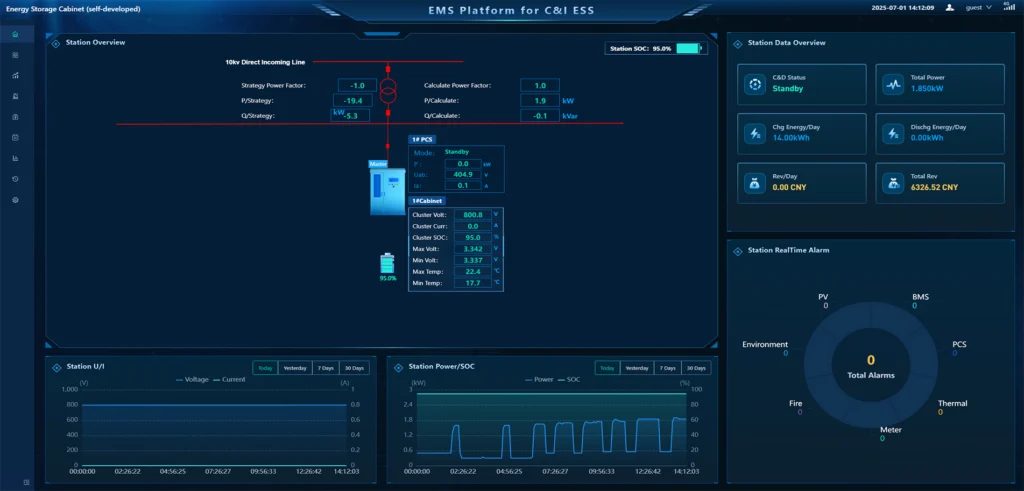
Apply a demo of Gerchamp’s Cloud Platform
 Gerchamp