For lead-acid battery systems, the setting of the float voltage is the key to determining whether the equipment can operate reliably for a long time.
Floating charge is to give the battery a little “trickle” when it is in a fully charged standby state. Its core function is to keep the battery in its peak state. Once the mains power is interrupted, it can take over immediately. Once the voltage deviates from the specifications given by the manufacturer, the battery will soon have problems-prolonged undercharging can lead to plate sulfation. High voltage will dry up the electrolyte or even cause thermal runaway. The common battery monitoring system (BMS) on the market is actually to put the voltage in this “golden range” to prevent the battery from being scrapped prematurely.

Lead-acid batteries are inherently self-discharging. If they are disconnected and placed there, the power will slowly run out. In data centers or industrial sites, we offset this consumption by floating charge. You can think of it as replenishing the water tank: as long as the pressure in the water inlet pipe is just enough to replenish the evaporated part, the water tank will always be full. However, if the pressure is not adjusted properly, either the water tank will dry up or the water tank will be damaged due to excessive pressure.
Even if you set the parameters perfectly, there are always two invisible variables at work:
Temperature interference: the chemical reaction inside the battery is particularly afraid of heat. When the ambient temperature fluctuates, the internal resistance will change. If you don’t have a smart system with temperature compensation, once the temperature of the computer room fluctuates, the charger may “over-pressurize” the battery at high temperatures, which is simply shortening the battery life.
String imbalance: The batteries in the battery cabinet are usually connected in series. After a long time, the decay rate of each battery cannot be exactly the same. Often, if one section is weak, it will drag down of the entire battery. Therefore, it is of little significance to focus on the total voltage. Real-time monitoring of every battery must be implemented in order to find out the “bad apple” before the fault spreads.
Don’t always rely solely on “repair after failure”, the core of maintenance must be transferred to “preventive management”:
Strictly control the parameter table: Every brand of battery is different; there are no universal settings. Follow the manufacturer’s instructions.
Real-time monitoring : A good BMS can automatically record the voltage trend and alarm when there are slight fluctuations, instead of waiting for the power failure to find the battery string.
Environmental control : since the floating charge pressure is so tied to the temperature, the air conditioner is not only cooling the server, but also the core infrastructure for battery maintenance.
Monitor the trend of the data: even a very slight voltage drift, is often a precursor to failure. Using software to analyze these changes and replace the part before it is completely scrapped is much cheaper than putting out fires afterwards.
All in all, the floating charge voltage is the “heartbeat” of the backup power system. By keeping an eye on this parameter and figuring out the health of every battery, you can avoid those expensive emergency replacement costs and ensure that your facility remains stable no matter how the grid fluctuates.
Author: Kevin
I am a Senior Engineer at Gerchamp’s BMS R&D Department with over 12 years of industry experience. I specialize in leading the architecture design and core algorithm development for our advanced Battery Management Systems.
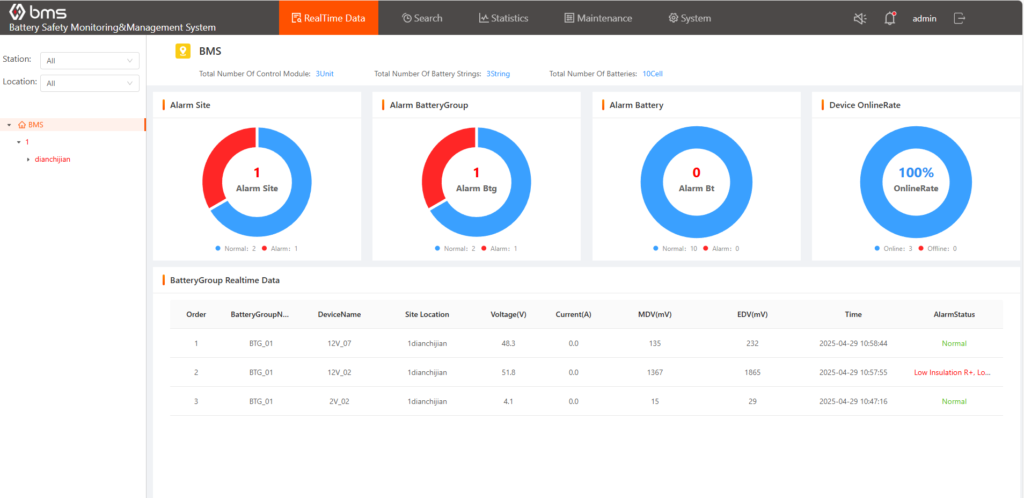
Apply a demo of Gerchamp’s Cloud Platform
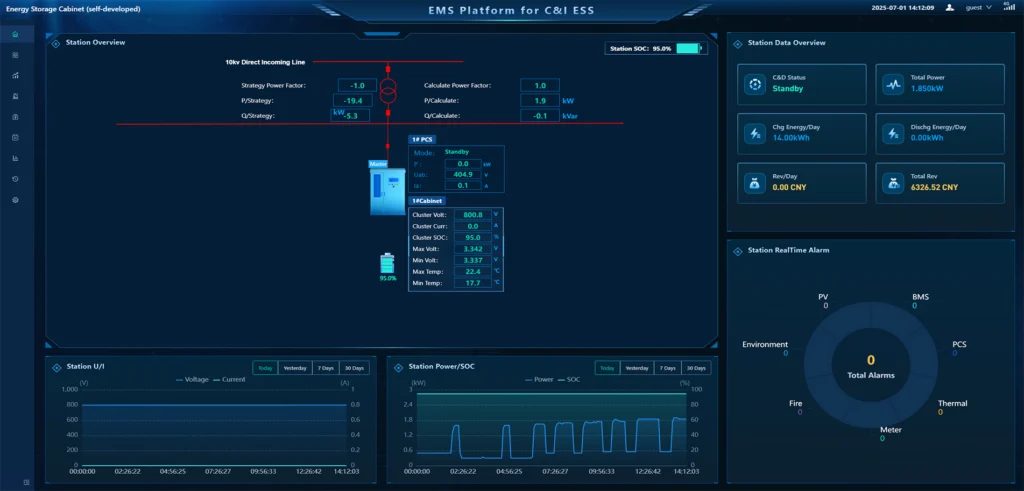
Apply a demo of Gerchamp’s Cloud Platform
 Gerchamp