Answer is yes, but the starting point is not “equilibrium”, but “mornitoring”. For mission-critical applications such as data centers, telecom base stations, or grid-level energy storage that do not tolerate any risk of downtime, lead storage batteries absolutely require a BMS, or more accurately, an advanced battery monitoring system.
Although lead-acid batteries (including VRLA, AGM, and gel batteries) are more stable than lithium batteries in terms of chemical properties, in actual operation and maintenance, lack of monitoring of battery is a major cause of power outages in critical facilities. A set of modern lead-acid battery BMS is not only for voltage equalization, it is more like a “digital safety net”. It predicts failure (SOH), prevents thermal runaway, and ensures that your UPS system can really stand up when mains power is interrupted by continuous monitoring of internal resistance, temperature and voltage at the single battery level.
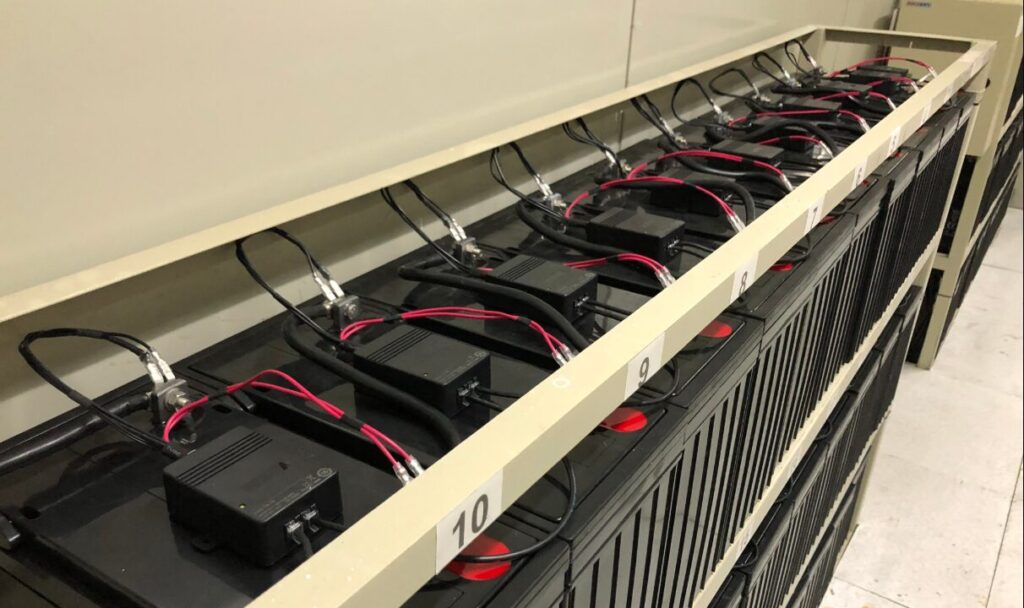
When many people ask this question, they habitually use lithium as a reference. Lithium batteries must indeed rely on BMS for cell equalization, otherwise catastrophic consequences may occur. But, the demand logic for lead-acid batteries is completely different: the focus is not on simple equalization, but on active management and visibility.
The purpose of a dedicated lead-acid battery BMS is not to force all batteries to be consistent, but to provide transparency. Without this level of monitoring, the operation and maintenance personnel would actually have “a black eye” on the actual state of the backup power supply. It was not until the braking moment when the power failure occurred that the failed at the critical moment.
The ordinary lead-acid battery solution without BMS is essentially based on an assumption-assuming that all batteries in the string age at exactly the same rate. But the reality is that small differences in production batches, uneven ambient temperature, and even loosening of a terminal can cause some single batteries to age faster than others. The role of BMS is to transform the batteries from a passive “black box” to a smart asset, ensuring that your infrastructure is supported by a “proven power source” rather than a “theoretical power source”.
How a UPS system performs depends entirely on the battery string behind it. In a typical high voltage battery string, as soon as one lead-acid battery fails and creates an open circuit or high impedance path, the entire battery string will collapse. If there is no BMS, this kind of fault often lurks very deep, until the mains is really cut off, the facility supervisor will suddenly find that the load is lost. The core value of BMS is to eliminate such “blind spots” and find out weaknesses before they endanger the security of the system.
To effectively manage lead-acid batteries, BMS must go beyond simple string voltage monitoring and go deep into the unit level to stare at these 3 key parameters:
SOH Prediction And Thermal Runaway Prevention
At the end of the day, the ultimate goal of installing BMS on lead-acid batteries is two: predicting state of health (SOH) and ensuring safety.
Predictive SOH: Through long-term analysis of internal resistance and voltage data, the system can calculate a clear SOH. This allows the operation and maintenance manager to accurately replace only those units that have problems, instead of throwing away the whole set of good batteries according to the schedule or waiting for disaster to happen.
Prevent thermal runaway: BMS can identify warning signs during the temperature rise and voltage fluctuation stages early in a thermal runaway event. It can trigger the control system to disconnect the charger or sound an alarm in time, nipping the danger in the bud.
Author : Caleb
I am the BMS Project Manager at Gerchamp. With nine years of experience in the electrical and battery industries, I specialize in critical data center power solutions. I have led teams in executing large-scale BMS installations for major domestic and international clients, including Alibaba, ensuring the safe integration and precise management of advanced battery power systems.
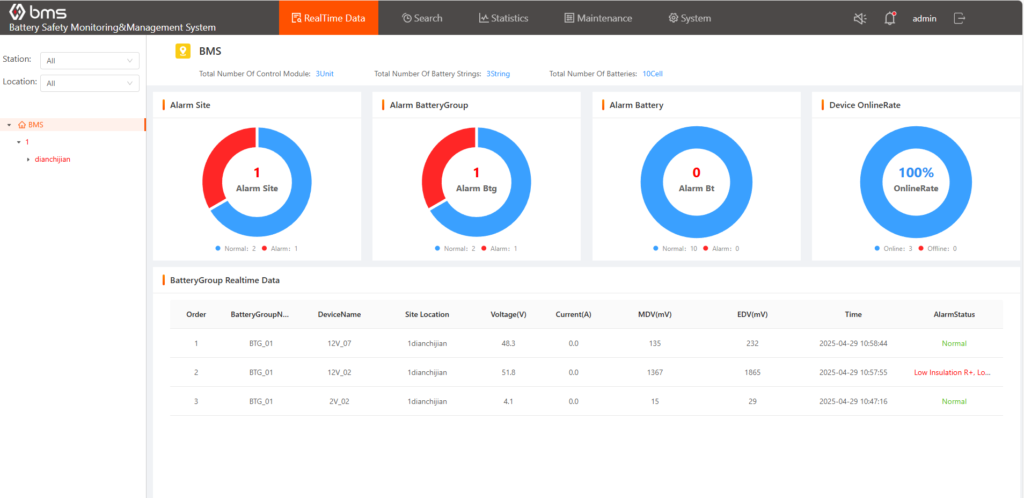
Apply a demo of Gerchamp’s Cloud Platform
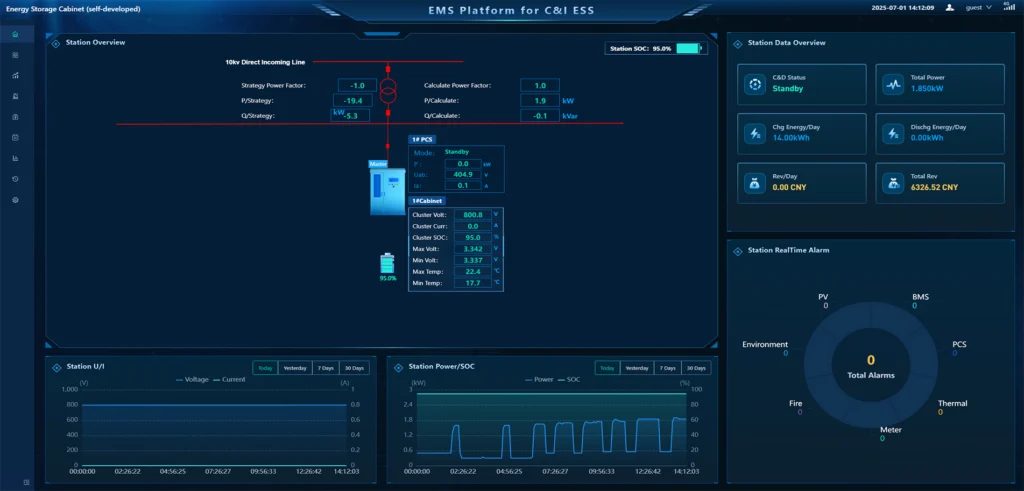
Apply a demo of Gerchamp’s Cloud Platform
 Gerchamp