For lead-acid battery assets, a professional battery monitoring system is not only an operation and maintenance tool, it is actually a key line of defense for automation in data centers and substations. Its core value is to completely transform the passive response mode of “broken and repaired” into predictive maintenance. Unlike traditional manual inspections-which, let’s be clear, are at best a “snapshot” at a certain point in time-a modern BMS can provide real-time monitoring of key health indicators. Here I refer specifically to the 3 core parameters: internal resistance (impedance), battery voltage, and negative terminal temperature. For valve-regulated lead-acid batteries (VRLA), which are widely used in UPS systems, this technology is essential to detect early sulfation or connection problems before causing the entire battery to fail. At the operational level, operations managers can instantly see the state of health (SOH) of each individual battery in the background. This can not only effectively prevent catastrophic thermal runaway, but also extend the service life of assets.
For facility managers in data centers and utility substations, relying solely on manual inspections is a huge risk. To be honest, manual inspections are often sporadic, usually only once a quarter or even half a year. This practice leaves a huge monitoring blind area, and the health of the battery is likely to deteriorate quietly during these “window periods. Implementing a dedicated monitoring system for lead-acid battery infrastructure essentially shifts the strategy from passive defense to active prediction. Instead of passively waiting for a failure to trigger an emergency response, the system collects data 24/7. This continuous flow of information allows operations personnel to identify trends-such as a gradual rise in impedance-so that they can be spotted weeks or even months before a fault actually occurs. In my experience, this is the only way to ensure 100 percent availability of critical backup power.
The effectiveness of any monitoring programme ultimately depends on the specific indicators it tracks. As mentioned earlier, there are 3 indicators that cannot be compromised when evaluating the health of a lead-acid battery:
Valve-regulated lead-acid batteries (VRLA) are the standard configuration of UPS systems, but they are sealed units, which makes it impossible to visually inspect the internal plates. This “black box” feature makes digital monitoring indispensable. A robust lead-acid battery monitoring system is specifically designed to detect common failure modes of VRLA. Two of the toughest questions are:
Perhaps the most significant return on investment (ROI) of deploying lead-acid battery monitoring systems is safety and longevity. Thermal runaway is a catastrophic failure mode in which an increase in temperature alters battery conditions, which in turn leads to a further increase in temperature, which can eventually lead to a fire or explosion. By monitoring the negative terminal temperature in real time, the system can disconnect the battery string or trigger an alarm before the temperature reaches a critical threshold. In addition, by optimizing the charging environment and replacing only specific bad battery cells instead of replacing the entire battery prematurely, companies can extend the life cycle of the overall asset. This significant reduction in capital expenditure, coupled with security guarantees, makes investing in modern BMS a double financial and operational necessity.
Author : Caleb
I am the BMS Project Manager at Gerchamp. With nine years of experience in the electrical and battery industries, I specialize in critical data center power solutions. I have led teams in executing large-scale BMS installations for major domestic and international clients, including Alibaba, ensuring the safe integration and precise management of advanced battery power systems. battery power systems. international clients, including Alibaba, ensuring the safe integration and precise management of advanced battery power systems.
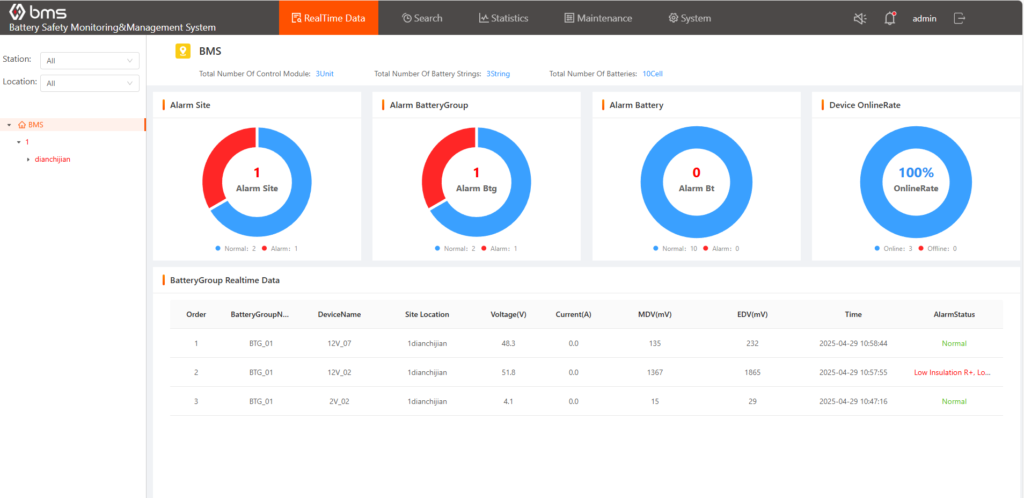
Apply a demo of Gerchamp’s Cloud Platform
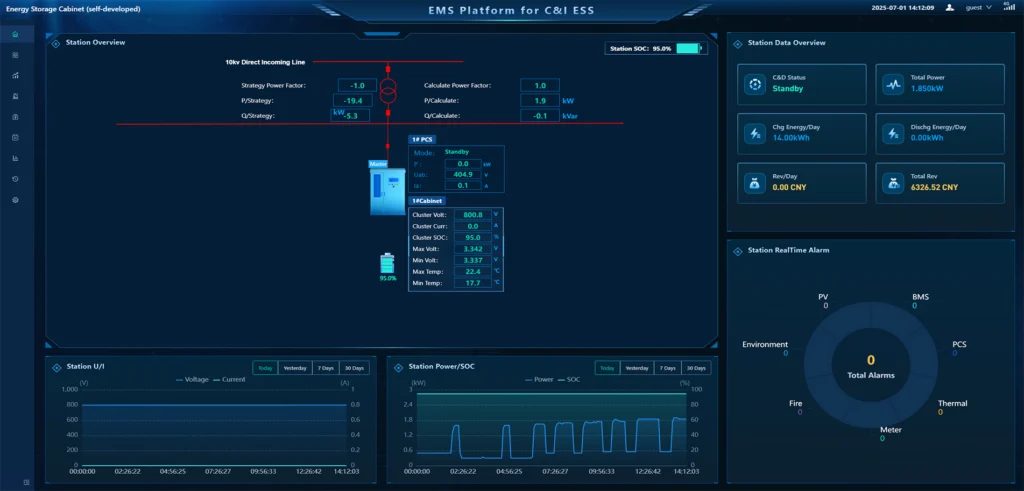
Apply a demo of Gerchamp’s Cloud Platform
 Gerchamp