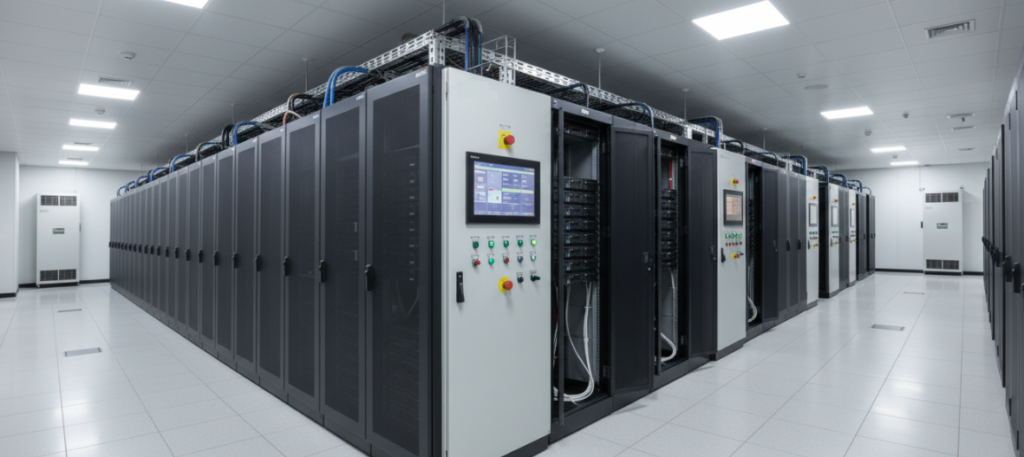
The current computer room infrastructure is evolving rapidly. UPS (uninterruptible power supply) has long been no longer just a simple backup power supply relegated to the corner. It is now the absolute “heart” in the data center, industrial control and edge computing network . In particular, the current popular high-frequency, transformerless UPS architecture is indeed highly efficient, but in the event of grid fluctuations, the instantaneous impact pressure on the battery pack is very scary.
Because of this, the battery health monitoring in modern UPS systems can no longer rely on the rely on outdated static rules. The core question now is not “have you installed monitoring”, but how deep and intelligent your system’s understanding of the batteries is.
Below I summarize how modern battery management systems (BMS) move beyond basic alarming and really provide reliability to the system.
In the old generation of systems, battery monitoring is basically a rigid rule-based operation: as long as the internal resistance (IR) or voltage of the battery meets the preset red line, it will immediately alarm. What’s the result? With a slight change in temperature or a temporary fluctuation in load, the operations and maintenance (O&M) supervisors’ cell phones are bombarded with these false alarms.
Now the practice has changed. Modern monitoring systems directly apply data algorithms, to establish a dedicated “digital baseline” for each battery block. Instead of staring at the rigid numbers, the system continuously analyzes the rate of change of the data (i.e., does trend analysis). To be honest, sometimes even if the internal resistance of a battery is still within the “normal” range in terms of technical standards, as long as the system finds that its resistance is climbing at an abnormal rate, it will immediately mark it. This intelligent filtering mechanism can ensure that every pop-up alarm really needs to be dealt with immediately, directly changing the system from passive beating to highly predictive.
Modern high-efficiency UPSs respond to power outages in milliseconds. At the moment of power failure, the battery pack will be subjected to a massive current draw. There has always been a common blind spot in the industry: an aging battery may look “extremely healthy” when measured in a static floating state . However, under the microsecond high voltage brought by the sudden discharge, its voltage will instantly avalanche, directly dragging down the entire UPS. This is something a static test cannot detect.
In order to solve this pain point, the battery monitoring of modern UPS systems is pushed to the extreme in measurement accuracy. The system must be equipped with high-precision sensors, and must be able to measure the internal resistance of the sub-milliohm level. Only through this continuous high-frequency sampling can we find out the internal hidden dangers that can only be exposed under extreme pressure in advance before the real power failure occurs.
Hardware is only half the battle. Nowadays, enterprises rarely live on a single centralized UPS. A park or enterprise network often has dozens of UPS, extending from the core data center to remote edge computing nodes.
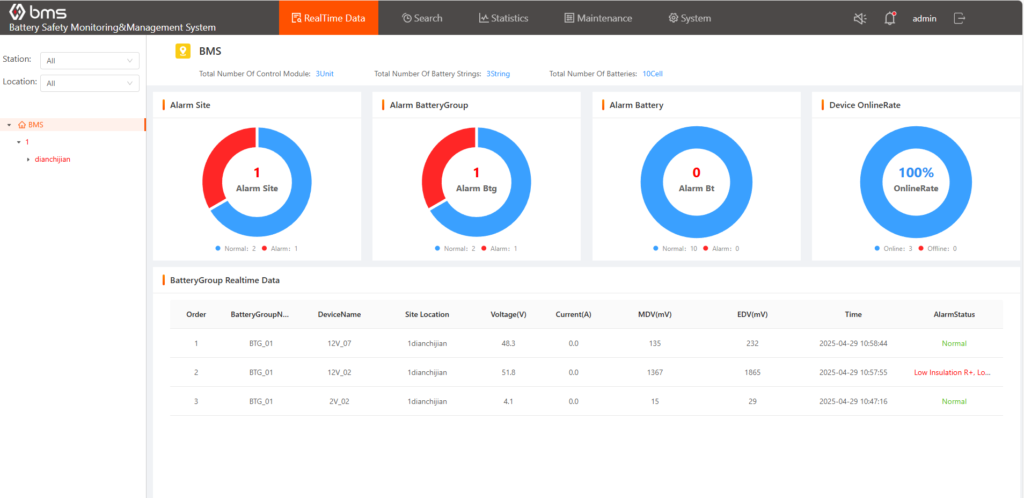
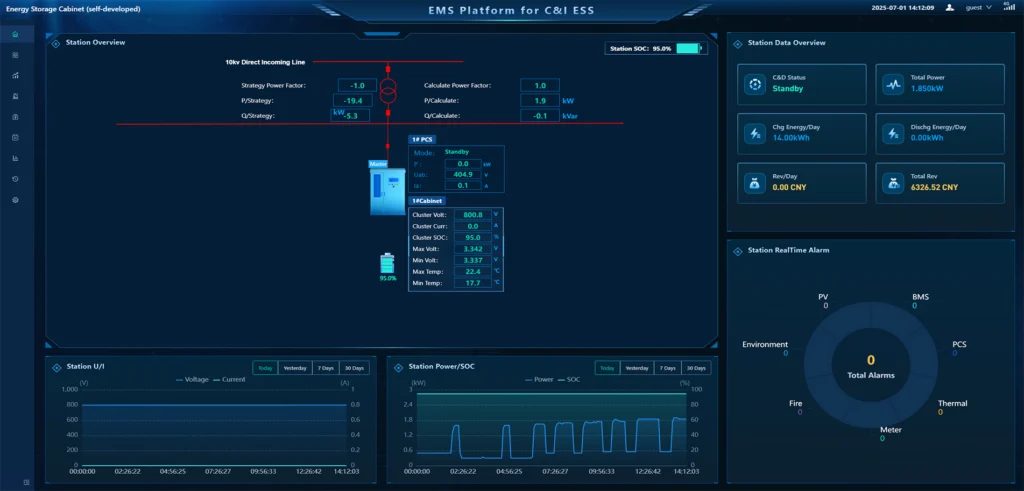
Modern UPS battery monitoring relies heavily on a powerful, centralized software layer. Solutions can directly aggregate real-time health status (SOH) and state of charge (SOC) data from multiple sites into an intuitive dashboard through the cloud platform. This global perspective is critical, allowing IT and room facilities teams to see the state of the global power network directly, and makes total cost of ownership (TCO) calculations and capital expenditure (Capex) forecasts much more accurate.
In the past, the practice of replacing UPS batteries in batches purely based on “calendar time” (for example, regardless of whether the batteries are good or bad, they discarded after 3 years) not only created a large amount of hazardous waste, but also a huge unnecessary expense financially.
With intelligent monitoring, we can finally really land “Condition-Based Maintenance”. By accurately identifying those rapidly degrading/failing battery blocks, operation and maintenance personnel can safely squeeze the remaining life of healthy batteries to the extreme without sacrificing system availability. This is actually the core logic of modern computer rooms: to ensure safety by preventing thermal runaway, to reflect green by reducing lead-acid/lithium battery waste, and to spend that limited maintenance budget in a smarter way.
Author: Kevin
I am a Senior Engineer at Gerchamp’s BMS R&D Department with over 12 years of industry experience. I specialize in leading the architecture design and core algorithm development for our advanced Battery Management Systems.
Apply a demo of Gerchamp’s Cloud Platform
Apply a demo of Gerchamp’s Cloud Platform
 Gerchamp