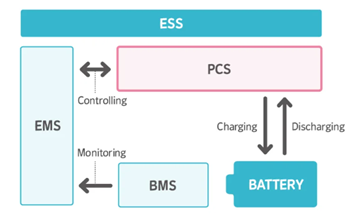
As the global energy landscape shifts toward renewable sources, lithium battery energy storage system (BESS) playd a critical role in improving grid flexibility and increasing renewable energy penetration. Within these systems, the Battery Management System (BMS), Power Conversion System (PCS), and Energy Management System (EMS) form the three core components—collectively known as 3S. Their seamless integration establishes a secure, efficient, and intelligent energy management loop, unlocking the full potential of energy storage systems.
Within an energy storage system, each of the 3S components has a distinct yet interconnected function. Together, they create a “Safety-Conversion-Optimization” cycle, maximizing the performance and reliability of energy storage systems.
BMS:the Safeguarding Monitor
BMS continuously monitors key battery parameters such as voltage, temperature, and internal resistance, and provides accurate SOC/SOH estimations while triggering protective mechanisms to prevent overcharging, over-discharging, and thermal runaway. In the 3S framework, BMS acts as the guardian of system safety:
PCS:the Adaptive Executor
As the bridge between batteries and the grid (or load), PCS is responsible for bidirectional AC-DC conversion, power regulation, and maintaining voltage, frequency, and phase stability. Within the 3S collaboration, PCS dynamically adjusts its execution based on EMS directives and BMS feedback:
EMS:the Intelligent Decision-maker
As the brain of the energy storage system, EMS analyzes data from BMS and PCS, applying AI algorithms and predictive models to optimize energy dispatch. This enhances overall system efficiency and economic value:
The current independent operation of 3S components may lead to data exchange delays and system coordination challenges. Moving forward, integrating BMS, PCS, and EMS into a unified modular intelligence unit presents a transformative opportunity. With simplified architecture, the 3S Integration Module will reduce data transmission latency, lower maintenance costs and significantly enhance the overall efficiency, reliability, and intelligence of energy storage systems, thus offering a powerful innovative solution for C&I ESS and BESS applications.
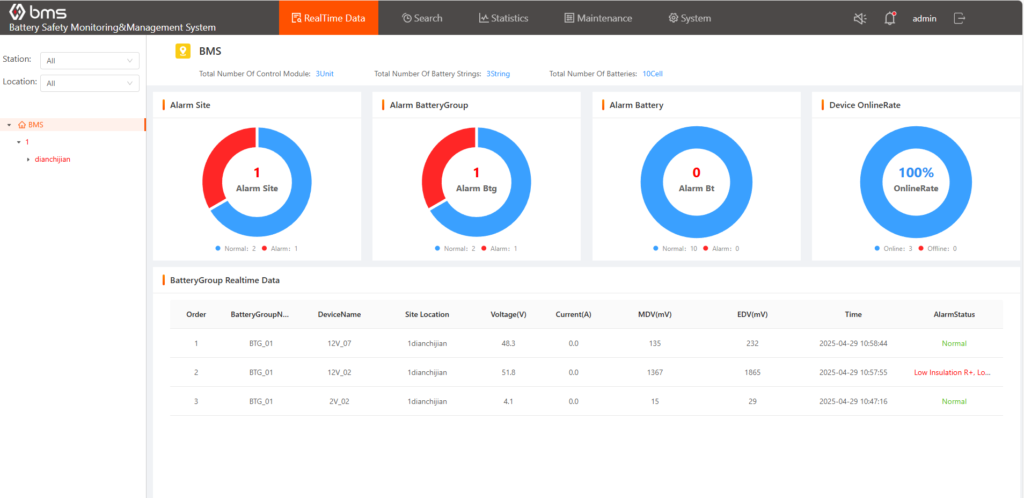
Apply a demo of Gerchamp’s Cloud Platform
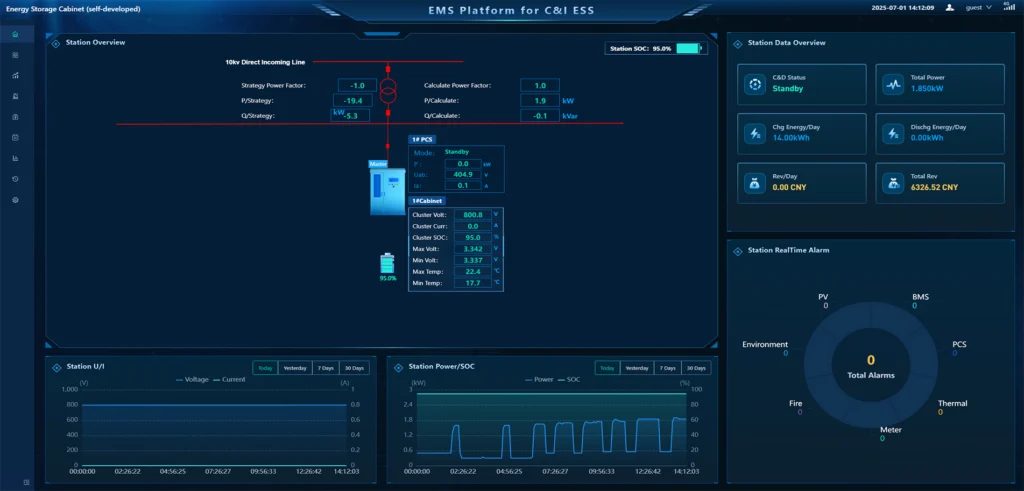
Apply a demo of Gerchamp’s Cloud Platform
 Gerchamp