
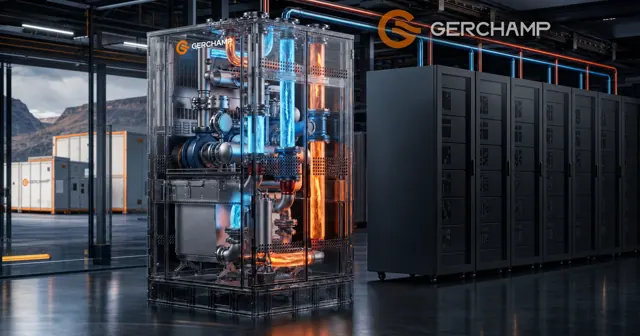
As AI and high-performance computing (HPC) applications continue to advance, server power density is steadily increasing, making heat dissipation an important consideration in modular data center design. Traditional air cooling may face limitations in cooling capacity and airflow management in high-density computing environments. As a result, liquid cooling solutions are increasingly becoming an important approach to managing the thermal loads of modern servers.
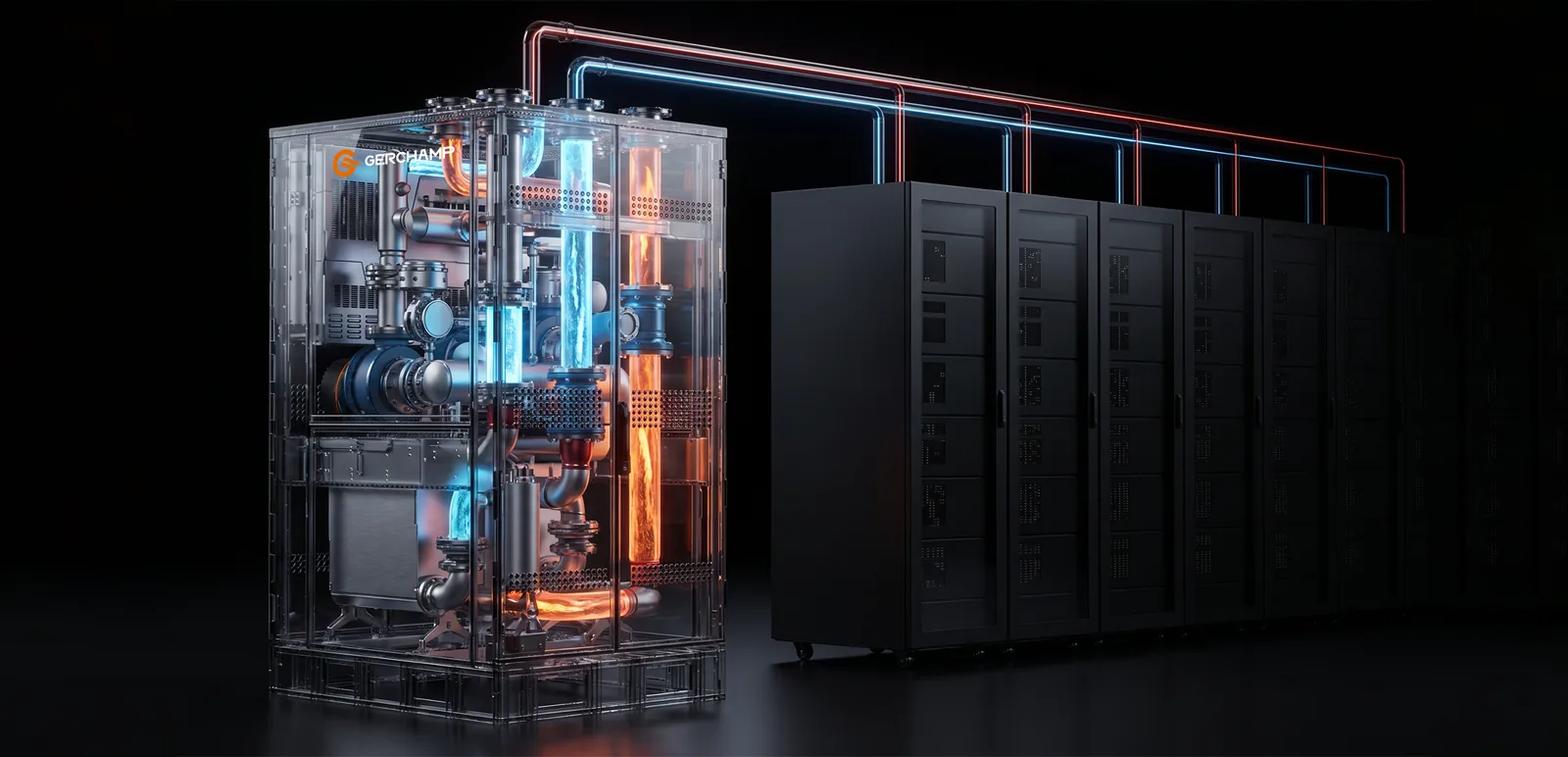
Among liquid cooling technologies, Direct-to-Chip (DTC) liquid cooling transfers heat directly from high-heat-load components such as CPUs and GPUs. In modular data centers adopting a DTC architecture, the cooling system must work through several stages, including coolant circulation, heat exchange, and external heat rejection, to effectively remove the heat generated by servers.
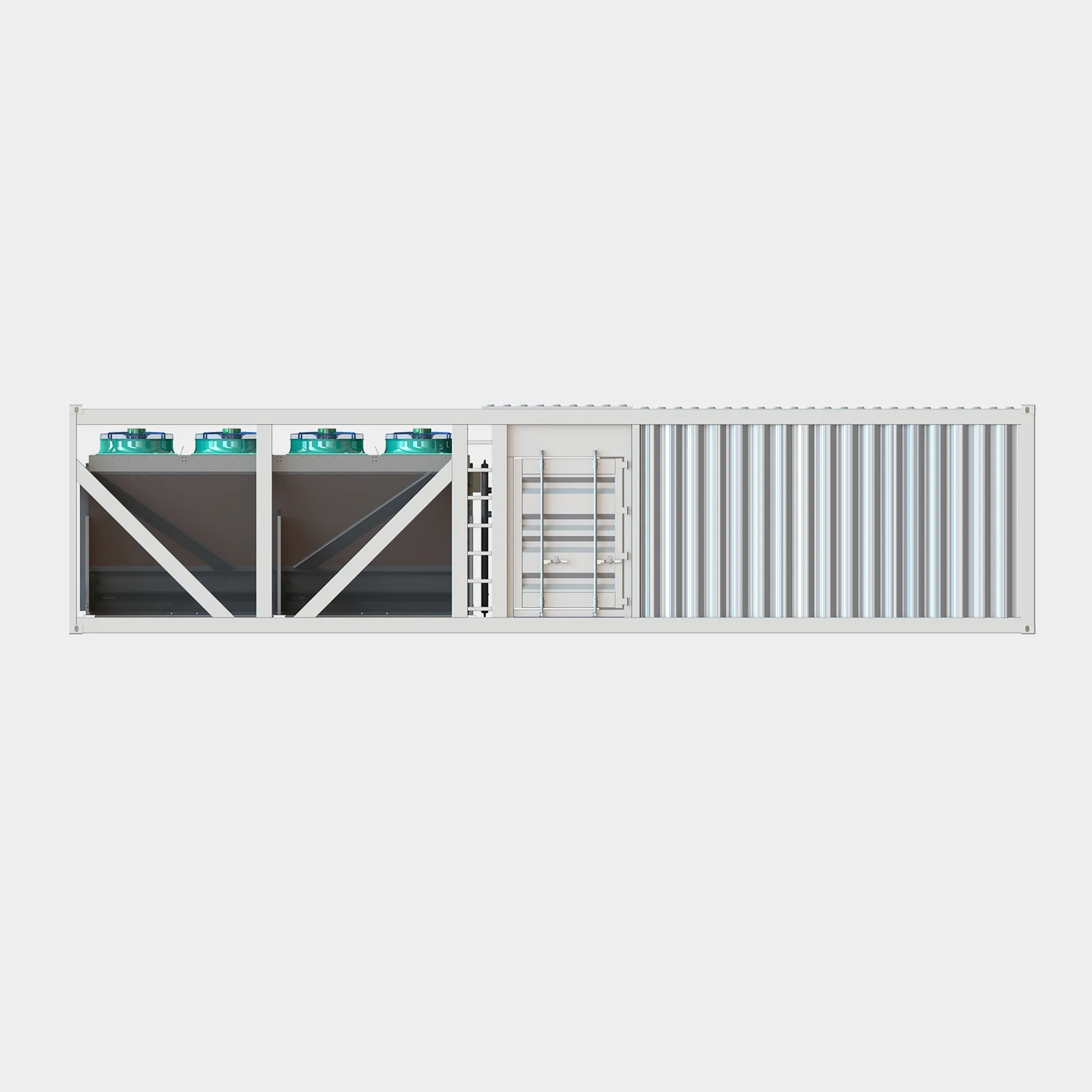
This means that liquid cooling involves more than just server-level thermal management. It also requires coordinated planning of coolant distribution units, external heat rejection systems, and the overall modular data center infrastructure. Gerchamp’s iChamp modular data center, for example, adopts closed-loop DTC liquid cooling, integrating server cooling with the design of the wider infrastructure.
How Does Direct-to-Chip (DTC) Liquid Cooling Work?
Direct-to-Chip (DTC) liquid cooling is a thermal management method that transfers heat generated by high-heat-load components, such as CPUs and GPUs, directly to circulating coolant. In a typical configuration, cold plates are mounted on the surfaces of chips. Coolant circulates through internal channels within the cold plates, absorbing heat before leaving the server-side cooling loop at a higher temperature.
The heated coolant then enters a heat exchange stage, where it transfers heat to a secondary cooling medium or releases it through an external heat rejection system. After the heat exchange process, the cooled liquid returns to the server-side loop, maintaining continuous circulation.
Unlike cooling methods that rely entirely on air flowing through servers to dissipate heat, DTC liquid cooling captures heat directly at critical heat-generating components such as CPUs and GPUs. In modular data centers, the server-side cooling loop, coolant distribution equipment, and external heat rejection system must work together to complete the entire process, from heat absorption to final heat rejection.
What Role Does a Coolant Distribution Unit (CDU) Play in a DTC System?
A Coolant Distribution Unit (CDU) is a key component of a DTC liquid cooling system. It connects the server-side cooling loop with the facility-side cooling infrastructure and manages coolant circulation and heat transfer between the two loops.
In a typical liquid cooling architecture, the CDU circulates coolant through the server-side loop and transfers the heat generated by IT equipment to the facility-side cooling system through an internal heat exchange process. The facility-side system then uses the corresponding heat rejection equipment to release the heat into the surrounding environment.
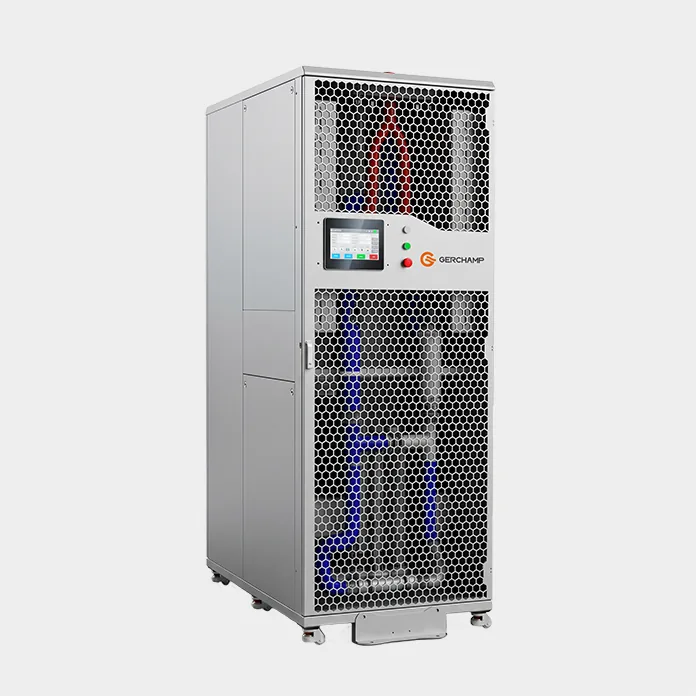
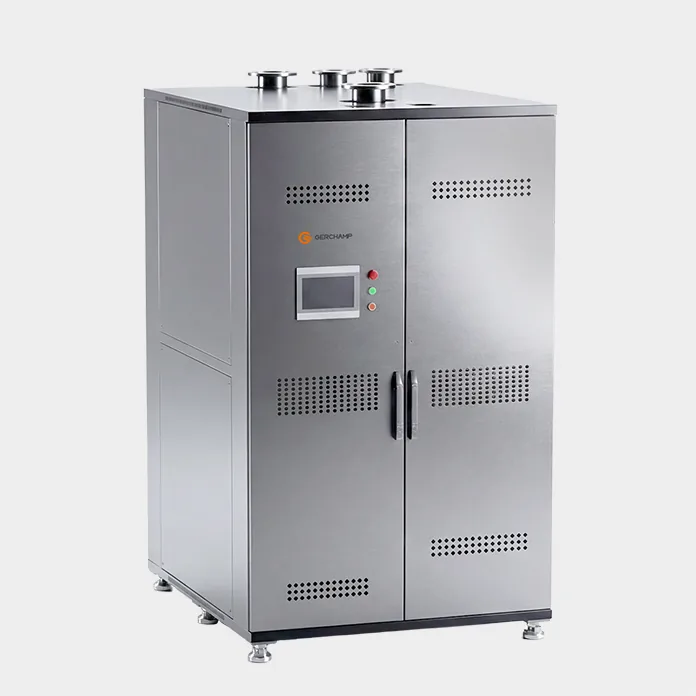
Depending on the heat exchange architecture, CDUs can be classified into different types, including Liquid-to-Liquid (L2L) CDUs and Liquid-to-Air (L2A) CDUs. An L2L CDU transfers heat between two separate liquid loops, while an L2A CDU uses air to reject heat. The choice of architecture depends on the liquid cooling system design and the heat rejection conditions at the installation site.
Therefore, a CDU does more than circulate and distribute coolant. It also connects the IT equipment’s liquid cooling loop with the overall heat rejection system. Integrating the CDU into the broader cooling design helps coordinate heat capture at the server level with heat rejection at the facility level, creating a complete thermal management chain.
Integrating Liquid Cooling Technology into Modular Data Center Design
Liquid cooling is not simply an independent cooling technology or a standalone piece of equipment. It is part of the overall infrastructure design of a modular data center. As server computing density continues to increase, server cooling, heat rejection, power supply systems, and other supporting infrastructure must be considered together rather than treated as separate components that can simply be combined.
Gerchamp integrates liquid cooling technology into the design and system integration of its iChamp modular data center, enabling server cooling, heat rejection, and other supporting infrastructure to be planned as an integrated system. The iChamp adopts closed-loop DTC liquid cooling, combining server-side cooling with supporting cooling infrastructure to provide integrated cooling support for high-density computing environments.
In addition to its integrated modular data center solutions, Gerchamp continues to develop standalone liquid cooling products and solutions for different data center applications.
Its CDU portfolio covers different heat exchange architectures, including Liquid-to-Liquid (L2L) and Liquid-to-Air (L2A), to accommodate varying data center layouts and cooling requirements.
Through both its modular data center solutions and standalone liquid cooling products, Gerchamp continues to expand its cooling technologies and infrastructure solutions for high-density data centers.
Conclusion
As AI and high-performance computing continue to drive higher server power densities, liquid cooling is becoming an increasingly important part of modular data center infrastructure design. From Direct-to-Chip (DTC) liquid cooling to Coolant Distribution Units (CDUs) and facility-side heat rejection, a complete liquid cooling system relies on multiple components working together.
For modular data centers, incorporating liquid cooling into the overall infrastructure architecture helps coordinate server thermal management with power supply, space planning, and other infrastructure requirements. By integrating liquid cooling technology into its iChamp modular data center and continuing to develop CDU and other liquid cooling products, Gerchamp provides multi-layered cooling infrastructure solutions for high-density data center applications.