
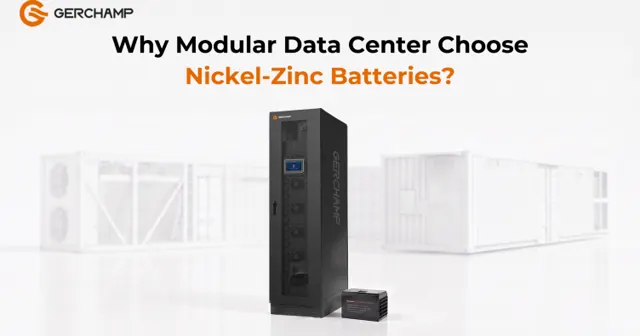
As data centers move toward modularity, prefabrication, and rapid deployment, power infrastructure design is facing new requirements. A modular data center (MDC) needs to integrate power, cooling, monitoring, and other critical facilities within limited space while balancing transport, on-site deployment, and long-term operational reliability. This is especially relevant for AI data center and AIDC workloads, where a modular AI data center may need compact, high-power backup support.
In this process, a data center backup battery is not just a component in the power system. It also affects space utilization, safety design, transport arrangements, and system integration across the entire module.
Among different technology routes such as lead-acid, lithium-ion, and Nickel-Zinc batteries, why is a Nickel-Zinc battery for data centers worth considering for modular data centers?
MDC Battery Selection: More Than Comparing Battery Performance
Traditional data centers can often place backup batteries in a separate battery room or equipment area, while a prefabricated modular data center emphasizes equipment integration and overall delivery. The choice of a modular data center battery therefore needs to be combined with the design of the entire module, rather than looking only at individual battery parameters. A battery for modular data center projects should be evaluated as part of the overall modular infrastructure.
Space and power density are the first factors to consider. Space inside the module must be allocated to IT equipment, power distribution equipment, UPS, batteries, and modular data center cooling. The battery’s volume, weight, and discharge capability all affect the overall layout, especially in applications requiring short-duration, high-power UPS backup.
Safety and system design are equally important. The battery chemistry affects thermal risk management, protection strategies, and system integration. Different technology routes require safety designs that match their characteristics; the safety level of the entire system cannot be judged by the battery name alone.
In addition, modular data center design usually emphasizes factory prefabrication, integrated testing, and rapid on-site deployment. Battery transport requirements, installation methods, and compatibility with UPS and monitoring systems also affect overall project implementation efficiency. This is particularly important for container data center projects, containerized data centers, data center container designs, and edge data center providers that need fast deployment.
Therefore, a battery solution suitable for an MDC needs to consider performance, safety, space utilization, and deployment requirements at the same time.
Why Compare Lead-Acid, Lithium-Ion, and Nickel-Zinc Batteries?
Different battery technologies have different characteristics, and their applicability depends on the specific backup duration, power demand, space constraints, and safety requirements.
Lead-Acid Batteries: Mature, but With Greater Space and Weight Burden
Although valve-regulated lead-acid (VRLA) batteries are mature and have a well-established supply chain, their lower energy density means that meeting the same backup requirement usually takes up more space and carries greater weight. For a modular data center (MDC) with strict limits on space and load-bearing capacity, this may reduce the layout space available for other critical equipment and increase the burden on module structural design and transport. A mature technology does not necessarily mean it is more suitable for compact, highly integrated MDC scenarios.
Lithium-Ion Batteries: Beyond Energy Density, System Safety and Deployment Still Need Comprehensive Consideration
Lithium-ion batteries have high energy density, but their application cannot be judged by energy density alone. Different chemistries have different safety characteristics, and system design also needs to comprehensively consider battery management, thermal management, electrical protection, and related safety requirements. In MDC scenarios, batteries often need to be tightly integrated with UPS, power distribution, and other infrastructure. In addition to the performance of the battery itself, safety protection design, transport compliance requirements, and system integration complexity also affect the implementation of the overall solution. Therefore, higher energy density does not equal a simpler system design. Battery solutions still need to balance space efficiency, safety requirements, and deployment convenience.
Nickel-Zinc Batteries: Balancing Intrinsic Safety Characteristics and High-Power Backup Demand
Nickel-Zinc batteries use an aqueous alkaline electrolyte system, and their chemical characteristics provide a choice different from traditional lead-acid and lithium-ion batteries for critical backup power. For a Nickel-Zinc battery for UPS applications, this can be relevant when short-duration, high-power support is the main requirement.
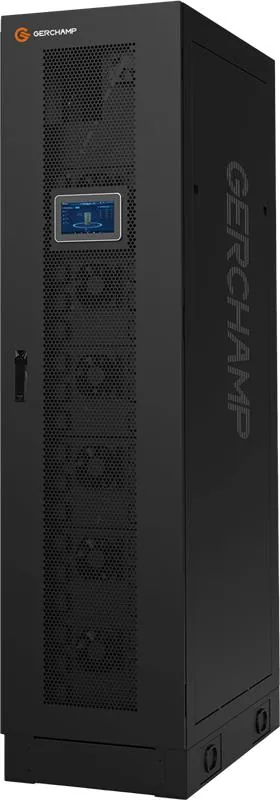
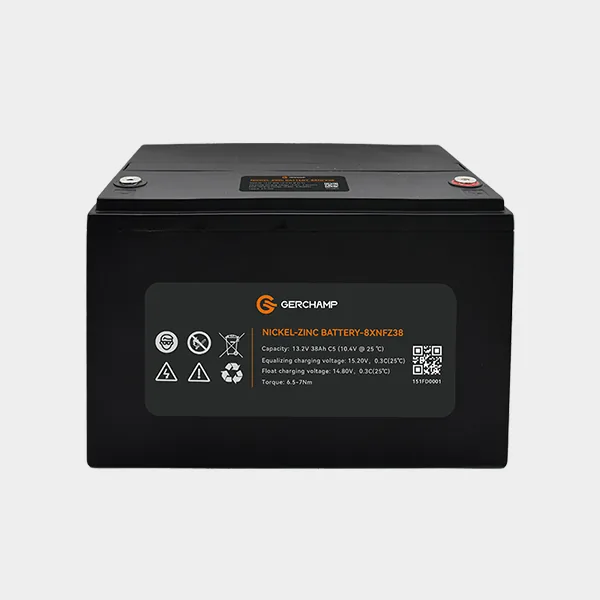
Gerchamp Nickel-Zinc batteries are designed for data center UPS backup applications and offer high-rate discharge capability. For example, a 90Ah Nickel-Zinc battery supports up to 10C discharge, making it suitable for backup power designs that require short-duration, high-power output.
In terms of safety, the aqueous electrolyte system and Nickel-Zinc chemistry provide a foundation for intrinsic safety design. Gerchamp Nickel-Zinc batteries also have corresponding safety test documentation, and their applicability can be evaluated based on the specific product and test scope.
In a modular data center, these characteristics are worth considering in light of actual projects: when backup power is mainly required for short-duration, high-power support, the battery does not necessarily need to be designed around long-duration energy storage. Instead, it should be selected based on the required backup duration, discharge power, and overall system architecture.
The value of Nickel-Zinc batteries is not about simply replacing all other batteries, but about providing another technology route for critical backup power that balances safety characteristics and high-power demand.
From Battery Selection to Modular Integration: The Application Value of iChamp MDC
Battery technology selection is only one part of MDC design. For a prefabricated modular data center, the real challenge is how to incorporate backup power together with power distribution, cooling, monitoring, and other systems into the overall design.
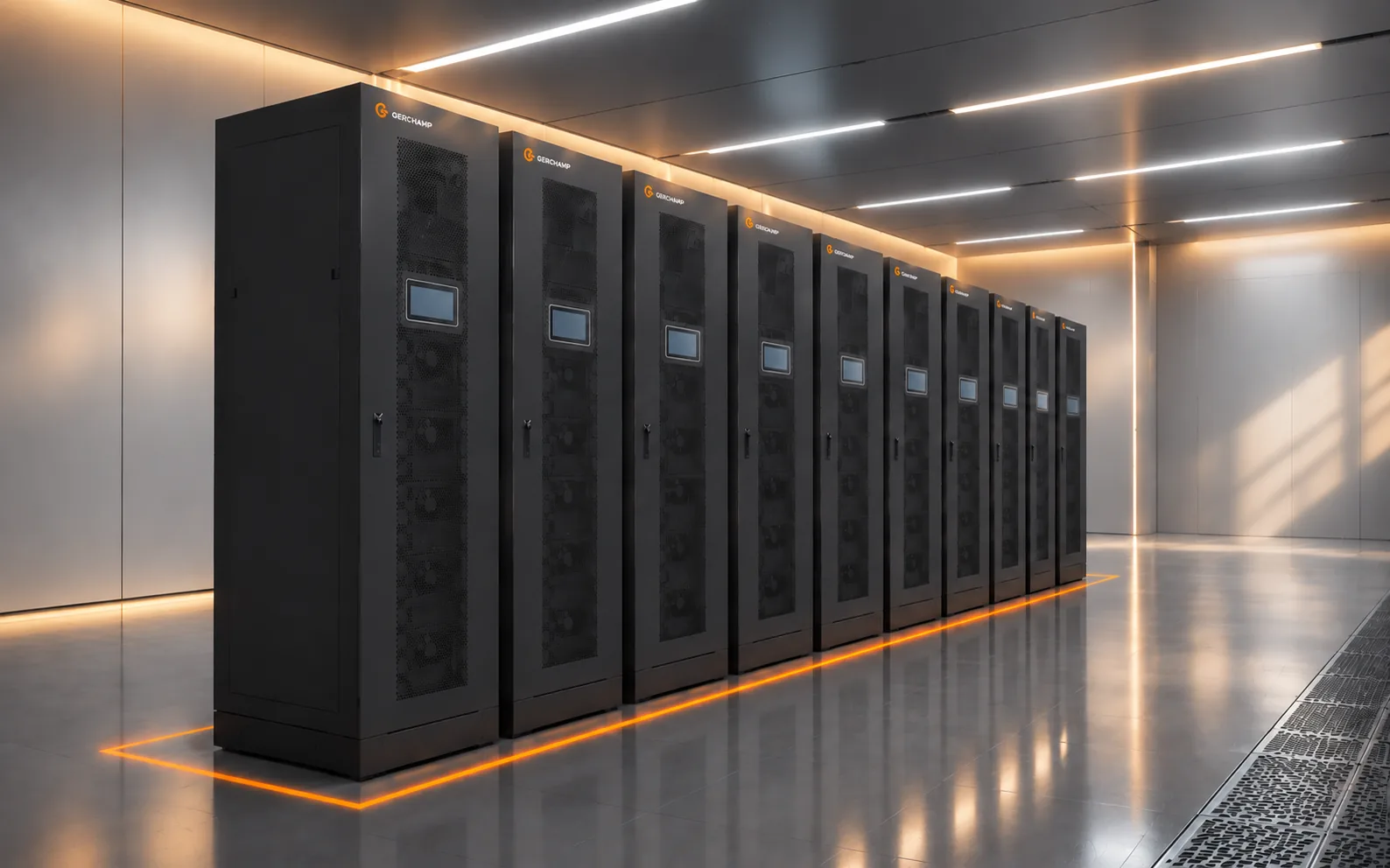
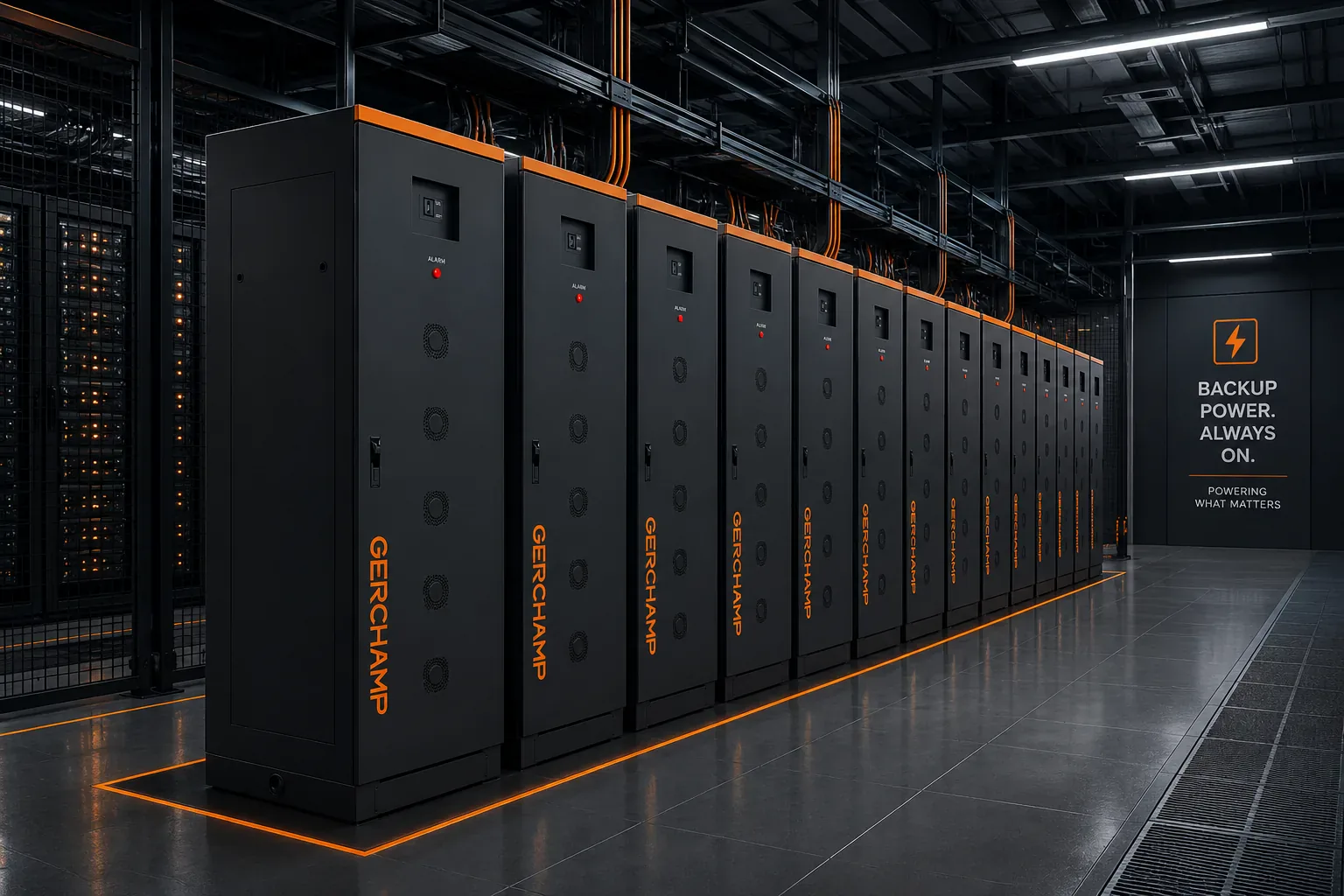
iChamp modular data center solutions are designed around prefabrication and integration, combining the critical infrastructure required by a data center into a modular solution. By coordinating equipment layout and system configuration at the design stage, projects can better align power, cooling, space, and on-site deployment requirements.
When Nickel-Zinc batteries are used in such solutions, their high-rate discharge capability and the safety design characteristics brought by the aqueous electrolyte system can become part of the overall power architecture assessment. The battery solution can be configured according to UPS backup duration, power demand, available space, and protection and monitoring requirements, rather than solving battery installation separately after the module design is completed.
This design approach, starting from the overall architecture, helps align battery technology with the deployment goals of modular data centers.
For project planners, the key is not only to choose a battery with excellent parameters, but also to confirm whether it can work with UPS, power distribution systems, cooling systems, and monitoring solutions and meet actual transport, installation, and operating conditions.
Choosing the Right Backup Battery Solution for Next-Generation Data Centers
The development of modular data centers has extended backup battery selection from a single-product comparison to a system-level comprehensive assessment.
With the intrinsic safety characteristics of its aqueous electrolyte system and high-rate discharge capability, the Nickel-Zinc battery for modular data center UPS backup provides another option for modular data centers. For projects evaluating Nickel-Zinc battery backup power, this chemistry offers a differentiated technical route that balances safety characteristics and high-power demand.
By combining battery technology selection with overall module design, iChamp modular data center solutions can coordinate critical infrastructure configuration around actual project requirements, while Gerchamp Nickel-Zinc batteries provide a differentiated technical option for UPS backup power design.
Learn about Gerchamp Nickel-Zinc batteries and iChamp modular data center solutions, and explore integrated backup power designs suitable for critical infrastructure projects.